Poor detoxification in kids with ADHD can make symptoms worse, but unfortunately, this piece of the puzzle is rarely addressed at doctor’s visits with parents.
In this fourth part of our ADHD Biology Series, we’re opening a layer that rarely gets discussed in traditional ADHD care: detox pathways — the body systems responsible for clearing toxins, stress hormones, inflammatory byproducts, and everyday metabolic waste.
When those systems are functioning well, the body functions at its best, but when there is poor detox (due to oxidative stress, inflammation, toxin exposure, or genetic differences like MTHFR and GST variants), the nervous system can start to feel the strain.
And that strain doesn’t always look like illness. It can look like sleep disruptions, emotional intensity, reduced resilience, or a whole host of other issues.
In Part 1 of this series, we uncovered how blood sugar dysregulation drives emotional chaos. In Part 2, we explored gut–brain dysfunction. In Part 3, we decoded hidden food reactions.
Now we’re looking at Layer Four: why detoxification may be the missing piece behind symptoms that seem behavioral but are actually deeply biological.
Let’s break down what detox really means in children with ADHD, what the research says about toxins and oxidative stress, and how to support these pathways safely and gently.
What Detoxification Actually Means (And What It Doesn’t)
When I say “detox,” I am not talking about:
- Detox teas
- Juice cleanses
- Extreme elimination protocols
- Heavy metal chelation at home
- Starving the body or “flushing everything out”
What we’re talking about here is the actual biological systems your child already has.
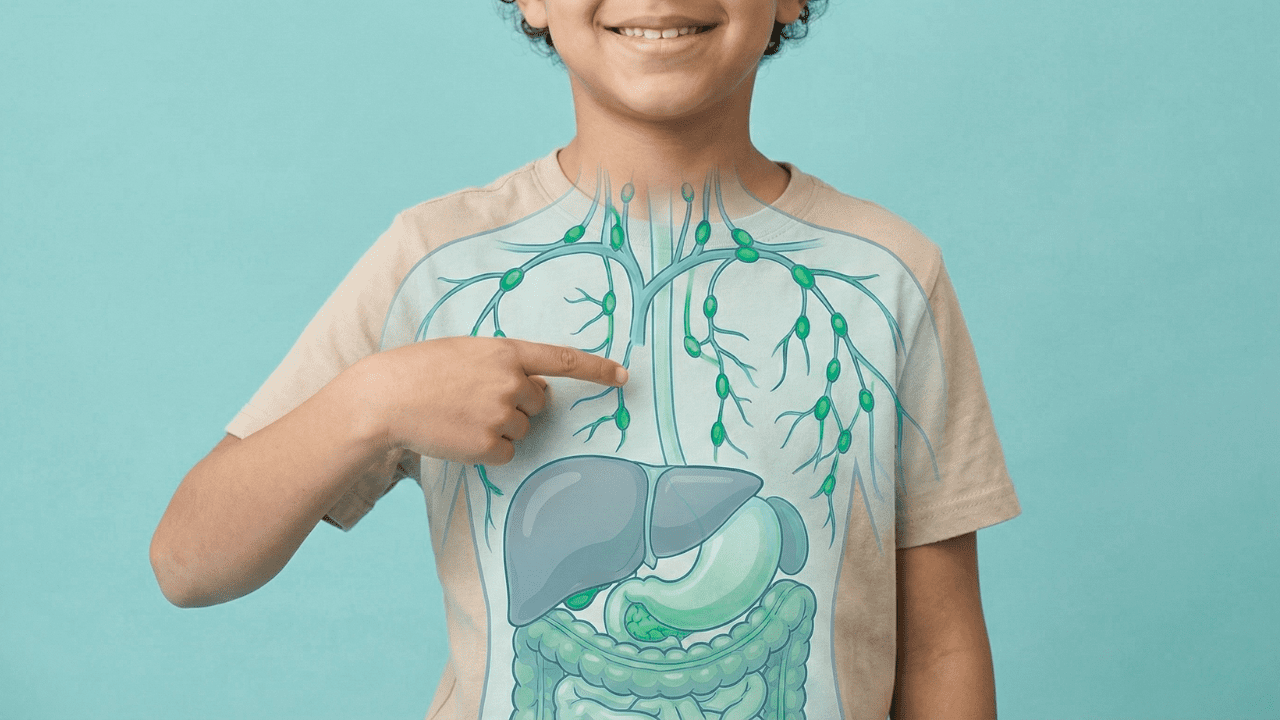
Your child’s body is designed to detox every single day. Detoxification is the way the body handles “waste” and unwanted chemicals: it changes them, packages them, and then gets them out through stool, urine, and breath. It’s not just one thing happening in one place, but a team effort between the liver, kidneys, gut, lungs, and skin working together to keep the body in balance.
In layman’s terms, I often explain detoxification as the process of:
- Neutralizing waste
- Packaging it safely
- Moving it out of the body
As mentioned, this happens through various organs, transporters, and enzymes, but to simplify for this post, let’s focus on three specific systems–what I call the three rubbish systems.

System 1: The Liver (The Packaging Department)
The liver is one of your child’s most important organs for processing medicines, food additives, and many chemicals they’re exposed to each day, as well as some normal waste from everyday metabolism. You can think of it as a busy processing center that helps turn many of these substances into forms the body can safely get rid of.
Scientists often describe this work in two main steps:
Phase 1 (breaking things down)
In Phase 1, liver enzymes start to break down toxins and drugs into smaller pieces. These in‑between products can sometimes be more “reactive,” which means the body needs to handle them quickly so they don’t cause damage.
Phase 2 (making them safer and ready to leave)
In Phase 2, the liver “attaches” other molecules to those reactive pieces so they become safer and more water‑soluble. This step uses things like sulfur, certain amino acids (from protein), and other natural compounds. Once this happens, the body can move them out through bile into the stool, or through the blood to the kidneys to be removed in urine.
Glutathione is a small molecule made in the body that acts like a key internal protector against wear‑and‑tear from everyday chemical reactions. It helps neutralize some of those reactive compounds, supports certain detox pathways in the liver, and protects cells—especially sensitive ones like brain cells—from oxidative stress.
Many studies suggest that children and adults with ADHD often show higher markers of oxidative stress (more “wear and tear” at the cell level) and differences in their antioxidant defenses compared with people without ADHD.
This doesn’t mean oxidative stress is the only cause of ADHD, but it does suggest that the balance between stress and protection systems, including glutathione, may be involved for some children.
Some children have genetic differences in enzymes that help with detox and antioxidant defenses, such as those involved in methylation (often discussed with MTHFR) or in glutathione‑related enzymes (like GST). These differences can slightly change how efficiently certain detox steps work, but they don’t automatically mean a child can’t detox or that they will develop ADHD.
For parents, the practical takeaway is this: supporting overall health can help the body’s natural detox systems do their job. If you’re worried about your child’s detox capacity or genetics, it’s best to work with a healthcare provider who understands both ADHD and environmental medicine, rather than relying on one lab test or one gene result.
System 2: The Gut (The Exit Door)
You can think of the gut as the body’s main exit lane for a lot of waste, including what the liver has already processed. When kids are constipated or their gut is very irritated, that “exit lane” can slow down.
When stool sits in the intestines for too long, some substances in it (including bile components and certain compounds the liver has helped remove) can be taken back up into the bloodstream.
This is sometimes called enterohepatic recirculation, and it means the body may have to process some of the same waste more than once. Regular, comfortable bowel movements and a healthy gut lining help waste leave the body efficiently and lower that recirculation.
System 3: The Lymphatic System (The Delivery Trucks)
The lymphatic system is a network of vessels and nodes that helps collect fluid, proteins, immune cells, and waste products from tissues and return them to the bloodstream so organs like the liver and kidneys can deal with them. It’s like a fleet of delivery trucks picking up “leftovers” from around the body and taking them back to be filtered.
Unlike the heart, the lymphatic system doesn’t have its own strong pump. Lymph flow depends on muscle movement, body position, breathing, and good hydration. When kids move their bodies, take deep breaths, sleep well, and stay hydrated, it generally supports lymph flow.
On the flip side, when kids are very sedentary, chronically stressed, or inflamed, lymph flow can be less efficient, a bit like traffic slowing down those trucks.
Why This Matters for ADHD
Every day, every child’s body makes metabolic waste just from being alive, and also has to handle things like food components, environmental exposures, and byproducts from immune and gut activity.
For most children, their detox and elimination systems are able to keep up with this work, but research suggests that, on average, people with ADHD tend to show:
- Higher levels of oxidative stress (more “wear and tear” molecules in the body).
- Differences in inflammation‑related markers compared with people without ADHD.
- Higher rates of gut issues (like constipation, abdominal pain, or altered microbiome) in some studies.
- Potential differences in certain detox and antioxidant enzymes.
These findings suggest that, for some kids with ADHD, the systems that manage inflammation, oxidative stress, and gut health may be under more strain. That doesn’t mean their bodies can’t detox, but it may mean they benefit even more from support for the basics: regular bowel movements, good nutrition, movement, sleep, and stress reduction.
Detox isn’t about forcing the body to do something extreme. It’s about supporting the systems that are already working every day, so they don’t get overwhelmed. When gut function, lymph flow, and the liver’s processing are all supported, some kids may feel and function dramatically better.
Why Kids with ADHD Struggle More with Poor Detox

Every human body detoxifies, but not every body detoxifies at the same speed. As already mentioned, research suggests that many children with ADHD may struggle more with poor detox than their peers.
Let’s break down why in plain English.
- Higher Oxidative Stress
Multiple studies report that children and adults with ADHD often have higher levels of markers linked to oxidative stress or lower levels of certain antioxidant defenses compared with people without ADHD.
Oxidative stress happens when the body produces more reactive molecules (free radicals) than it can safely neutralize. Think of it like internal “rust.”
When oxidative stress is high, research suggests that:
- Brain cells may be more vulnerable to damage
- Inflammation‑related signals can increase
- Detox and repair pathways may have more work to do
- Antioxidant systems such as glutathione can be used up more quickly
If detox systems are the “rubbish service,” oxidative stress is like constantly adding extra bags to the bin. Over time, it can make it harder for the system to stay fully caught up.
- Greater Sensitivity to Environmental Toxins
Research has found associations between exposure to certain heavy metals (such as lead, and in some studies mercury or cadmium) and a higher risk of neurodevelopmental challenges, including attention and behavior problems.
This does not mean every child with ADHD has heavy metal toxicity, or that metals are the sole cause of ADHD.
It does suggest that some developing nervous systems may be more sensitive to environmental “load.” When you add in other exposures—like pesticides, plastics (such as BPA and phthalates), air pollution, and certain food additives—the total workload the body has to manage can increase.
For a child whose detox and antioxidant systems are already under more strain, that extra load may build up faster or be harder to handle.
- Genetic Detox Variations
Certain genetic differences can influence enzymes that help with methylation, antioxidant defenses, and detox‑related pathways. This is one area where functional and integrative medicine often “connect the dots,” but it’s important to remember that the science is still emerging.
Examples include:
- MTHFR (affects folate metabolism and methylation, which can feed into some Phase 2‑type processes)
- GSTT1, GSTM1, GSTP1 (genes involved in glutathione‑related enzymes that help clear some reactive compounds)
If these pathways are less efficient, a child’s body may process some toxins more slowly, have more difficulty neutralizing oxidative stress, or rely more heavily on limited antioxidant reserves.
That doesn’t mean something is broken; it just means this particular system may benefit from extra support (nutrition, antioxidants, avoiding unnecessary exposures) rather than from “pushing detox” aggressively.
- Gut Dysfunction Makes Detox Harder
Remember from Part 2: The gut is both a major communication hub with the brain and a key “exit door” for waste. When the gut is inflamed, leaky, or chronically constipated, several things can happen:
- Substances that were meant to leave in the stool can be reabsorbed into the bloodstream (enterohepatic recirculation).
- Inflammatory byproducts in the gut can increase.
- The liver may have to handle some of the same waste more than once.
It’s like trying to take out the trash when the door is jammed and some bags keep falling back into the house. Over time, that can add extra strain to systems that are already doing their best.
Signs Your Child’s Detox Pathways May Be Under Strain
When a child’s detox and repair systems are coping well, you usually don’t notice anything at all. But when those systems are under more strain, some children begin to show patterns that get many parents’ attention.
Some parents and clinicians notice patterns like:
- Lower stress tolerance
- Bigger or more frequent emotional reactions
- Increased sensory sensitivity
- Sleep that is lighter, more restless, or harder to settle
- Strong or unusual body odor
- Night sweats or nighttime waking
- Itchy skin or flushed cheeks
- A child who feels “tired but wired” and has trouble turning their brain off at night
None of these automatically mean “detox issue,” and all of them can have several different causes. But when you see a cluster of them together, especially in a child who also has ADHD and gut or immune challenges, it can be a clue that their overall “load” (inflammation, oxidative stress, and environmental exposures) is worth looking at more closely.
What Happens When the Bin Overflows
If toxins and metabolic waste aren’t cleared efficiently, they don’t simply disappear. Sometimes, they can be taken back up from the gut into the bloodstream, inflammatory byproducts can linger longer, and oxidative stress can increase.
Over time, that internal pressure can then begin to affect the nervous system.
Scientists are increasingly interested in how inflammation and immune signaling might interact with the brain in conditions like ADHD. Inflammatory chemicals in the body can influence the nervous system, including pathways that involve the vagus nerve (a major “information highway” between the body and brain) and brain regions involved in stress and self‑control.
The frontal areas of the brain help with impulse control, emotional regulation, planning, and stress recovery. When these circuits are under strain—for any reason, including possible contributions from inflammation—children may show more impulsivity, emotional ups and downs, sensory overwhelm, big reactions to small transitions, and lower frustration tolerance.
This isn’t about willpower. It’s about capacity. If the nervous system is already busy handling internal pressure, it has less room to manage external stress.
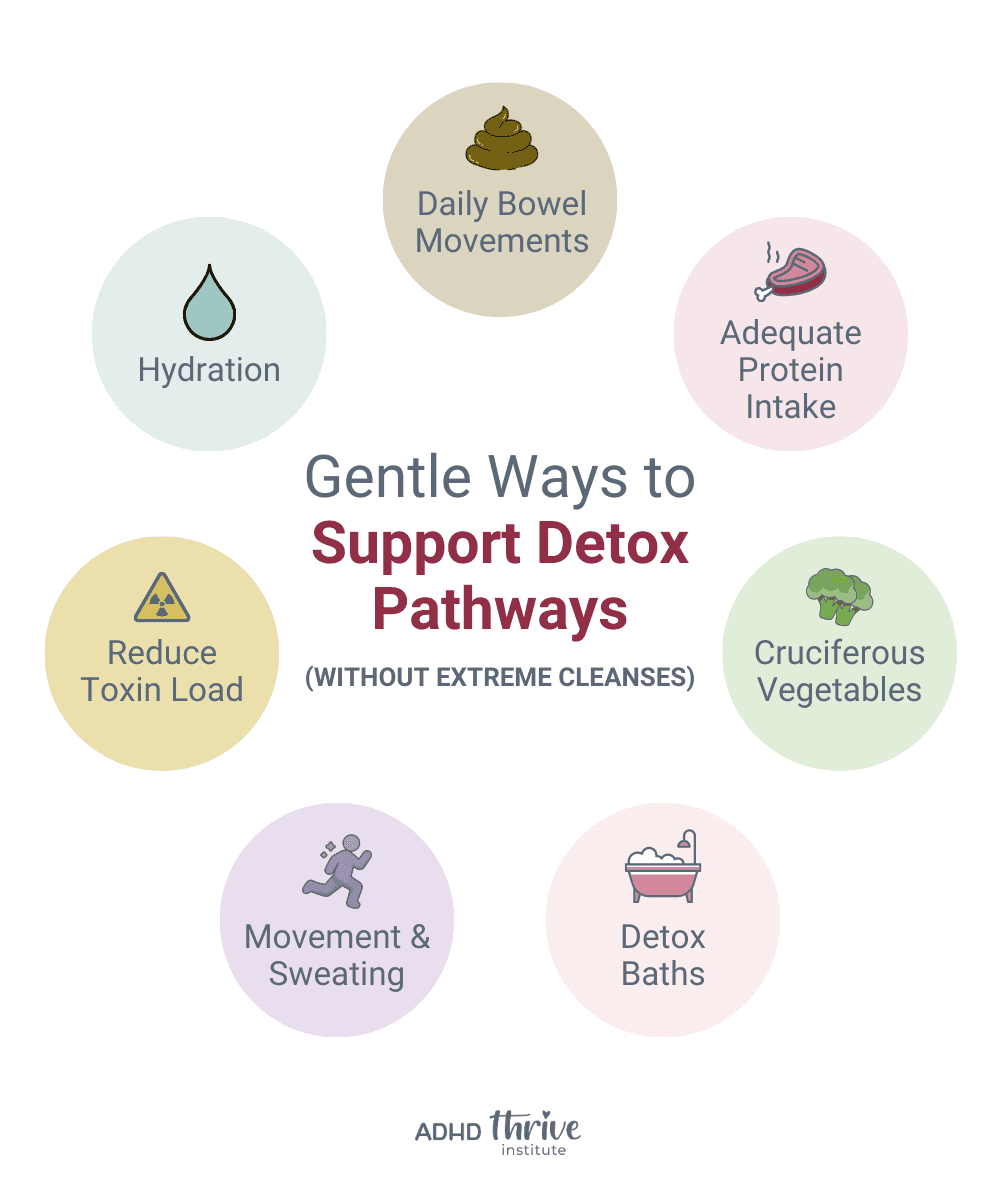
Gentle Ways to Support Detox Pathways (Without Extreme Cleanses)
If you’ve read this far and are thinking, “Okay… so what do I actually do?” keep reading, because I have some tips for you.
But remember, children’s bodies are already designed to detox. The goal isn’t to push harder. It’s to reduce the load and strengthen the systems doing the work.
Here are simple, parent-friendly ways to begin:
- Hydration
Water is essential for flushing out water-soluble toxins. Even mild dehydration can make it harder for the body to move fluids, stool, and waste products efficiently. Encourage steady hydration throughout the day, not just at night.
- Daily Bowel Movements
If your child isn’t pooping regularly, it’s harder for the body to clear what it’s trying to get rid of. Many waste products (including substances processed by the liver) leave the body in stool. When stool sits too long, some components can be reabsorbed instead of eliminated.
- Adequate Protein Intake
Phase 2 liver detox relies on amino acids, the building blocks of protein. If a child is mostly eating carbs and snack foods, their body may not get enough of the amino acids it needs for growth, repair, and certain detox‑related processes.
Ensure your child is eating plenty of high quality, organic if possible, protein sources like eggs, chicken, grass-fed meats, beans (if tolerated), etc. at each meal.
- Cruciferous Vegetables
Broccoli, cauliflower, cabbage, and brussel sprouts contain natural compounds that can support some of the liver’s detox enzymes.
- Detox Baths
Magnesium sulfate (Epsom salt) baths can be relaxing for many children and may support muscle relaxation and a sense of calm. If magnesium seems to help at first and then doesn’t feel as effective, that’s a gentle reminder to look more broadly at sleep, nutrition, stress, and gut health rather than relying on one remedy.
- Movement & Sweating
The lymphatic system relies on muscle movement to help fluid circulate. Daily movement (bouncing, walking, sports, dancing) helps those ‘rubbish trucks’ keep moving. Sweating through active play is another natural way the body releases some waste products and supports overall regulation.
- Reduce Toxin Load
Sometimes the most powerful detox step isn’t adding something. It’s removing something.
Look at:
- Artificial fragrances
- Plastic food storage
- Synthetic air fresheners
- Heavily processed foods
- Harsh cleaning chemicals
Even small reductions can lower the overall burden on the body and give your child’s natural detox systems less to keep up with.
By now you’re probably realizing that ADHD symptoms aren’t random. They’re often caused – or at least exacerbated – by internal biological stressors.
Which is why, inside the ADHD Thrive framework, poor detoxification is Biological Stressor #4.
The ADHD Thrive Decoder Kit – Seeing the Detox Layer Clearly
Throughout this series, we’ve been peeling back the layers that drive ADHD symptoms beneath the surface.
So far, we’ve covered:
- Blood Sugar Dysregulation
- Gut–Brain Dysfunction
- Food Reactions
- And now: Poor Detox Pathways
Each layer affects the nervous system in a different way, and most families are trying to solve all of them at once, without realizing which one is actually speaking the loudest.
That’s exactly why we created the ADHD Thrive Decoder Kit.
Inside, you’ll get:
✔ A physical Decoder Wheel that helps you identify which of the five biological stressors may be driving your child’s symptoms
✔ Clear, parent-friendly guides that translate behavior into biology
✔ Gentle “Try This Today” steps that don’t blow up your life
This is a clarity tool.
Because when you know which layer is active, you stop guessing, and you start supporting the right system.
We don’t charge for the kit itself. You simply cover shipping so we can get it into as many homes as possible.
If detox is the missing piece in your home, this will help you see it clearly.
Please note that at this time, shipping is available within the United States only.

Coming Up Next: Nutrient Deficiencies
Next, we open the fifth and final biological stressor we consistently see in kids with ADHD: Nutrient Deficiencies.
Because sometimes the brain isn’t overloaded. Sometimes it’s under-supplied.
Stay tuned. This final layer ties picky eating, impulsivity, focus struggles, and low motivation together in a way that often surprises parents.
FAQs about Detoxification and ADHD
Can toxins cause ADHD symptoms?
Toxins don’t directly “cause” ADHD on their own, but research shows that exposure to certain environmental chemicals and heavy metals is associated with a higher risk of attention and behavior problems, and may increase oxidative stress and inflammation in the brain.
Children with ADHD, on average, often show higher levels of oxidative stress markers than their peers, suggesting their antioxidant and repair systems may be under more strain. For some sensitive children, ongoing exposure to pollutants or chemicals may contribute to worse mood, sleep, and self‑regulation, alongside other factors like genetics, nutrition, sleep, and stress.
Why does my ADHD child wake at 2am?
Many parents notice that their child with ADHD wakes in the early hours of the morning, and this can have many causes, such as anxiety, blood sugar swings, circadian rhythm issues, or medical sleep disorders. Some practitioners also consider internal “load” (like inflammation, gut discomfort, or stress hormones) when early‑morning waking is persistent. While it’s not accurate to say every 2am wake‑up is detox‑related, repeated night waking alongside other signs of internal stress can be a signal to look more closely at sleep, nutrition, gut health, and overall exposures rather than just behavior.
What is oxidative stress in ADHD?
Oxidative stress occurs when the body produces more reactive molecules (free radicals) than it can neutralize with antioxidants like glutathione. Several studies show that children and adults with ADHD often have higher oxidative stress markers or altered antioxidant defenses compared with people without ADHD. Persistently high oxidative stress can contribute to inflammation and place extra demand on the body’s repair systems, which may influence brain regions involved in attention, impulse control, and emotional regulation.
How do detox pathways work in children?
Detoxification in children involves several systems working together, including:
- The liver, which modifies and packages many substances (often described as Phase 1 and Phase 2 reactions) so they can be removed.
- The gut, which helps eliminate waste and substances the body has processed, through regular bowel movements.
- The kidneys and urinary system, which filter the blood and remove many water‑soluble wastes in urine.
- The lymphatic system, which helps move fluid and waste products from tissues back into circulation to be handled by the liver and kidneys.
When these systems are functioning well, many waste products and pollutants are cleared efficiently. When gut, liver, or kidney function is impaired, or overall load is high, some substances can linger longer in the body and may contribute to inflammatory stress.
Is detox safe for kids?
Extreme “detox” protocols, strict juice cleanses, and aggressive chelation are not appropriate for children unless they are clearly medically indicated and supervised by a qualified specialist. What is appropriate is gently supporting the body’s natural systems by focusing on hydration, daily bowel movements, balanced nutrition with enough protein and micronutrients, regular movement, good sleep, and reducing avoidable toxin exposure. These strategies are generally safe for most children and align with how the body is already designed to work. The goal is to support healthy function, not to force dramatic detox reactions.
Resources:
Anand, D. et al. “Association of ADHD with inflammatory markers in children.” J Child Neurol. 2017;32(10):825–831.

Aarts, E. et al. “Gut microbiome in ADHD and its relation to neural reward anticipation.” PLoS One. 2017;12(9):e0183509.

Bloch, M. H. & Qawasmi, A. “Omega‑3 fatty acid supplementation for the treatment of children with ADHD: A meta‑analysis and review.” J Am Acad Child Adolesc Psychiatry. 2011;50(10):991–1000.

Bulut, M. et al. “Altered oxidant and antioxidant status in attention deficit hyperactivity disorder.” Psychiatry and Clinical Neurosciences, 2007.

Ceylan, M. et al. “Oxidative stress and antioxidant status in children with attention‑deficit/hyperactivity disorder.” Neuropsychobiology. 2012;65(4):219–225.

Darwish, A. H. et al. “Inflammatory markers in children and adolescents with attention‑deficit/hyperactivity disorder: A systematic review and meta‑analysis.” Neurosci Biobehav Rev. 2019;100:120–128.

Frosst, P. et al. “A candidate genetic risk factor for vascular disease: A common mutation in methylenetetrahydrofolate reductase (MTHFR).” Nature Genetics, 1995.

Gashev, A. A. “Lymphatic vessels: Pressure‑ and flow‑dependent regulatory reactions.” Ann N Y Acad Sci. 2008;1131:100–109.

Ghanizadeh, A. “Increased glutathione peroxidase enzyme activity in attention deficit hyperactivity disorder.” Psychiatry Clin Neurosci. 2011;65(6):583–585.

Hayes, J. D. & Strange, R. C. “Glutathione S‑transferase polymorphisms and their biological consequences.” Pharmacology, 2000.

Hofmann, A. F. “The enterohepatic circulation of bile acids in health and disease.” Gastroenterology. 1967;52(4):664–670.

Ioannides, C. “Detoxification enzymes: Cytochrome P450 and other phase I and phase II enzymes in drug metabolism.” In Enzyme Systems that Metabolise Drugs and Other Xenobiotics, 2002.

Jiang, H. et al. “Altered gut microbiota profile in children with attention deficit hyperactivity disorder.” Neurosci Lett. 2018;656:41–46.

Joseph, N. et al. “Oxidative stress and antioxidant status in children with attention‑deficit/hyperactivity disorder: A systematic review and meta‑analysis.”

Joseph, N. et al. “Oxidative stress and ADHD: A meta‑analysis.” J Atten Disord. 2015;19(11):915–924.

Kul, M. et al. “Total oxidant and antioxidant status in children with ADHD subtypes.” Psychiatry Res. 2015;229(1–2):253–260.

Lopresti, A. L. “Oxidative and nitrosative stress in ADHD: An integrative review.” J Neural Transm. 2015;122(10):1359–1377.

Lopresti, A. L. et al. “The effects of multinutrient supplementation on oxidative stress in children with ADHD.”

Oades, R. D. et al. “Attention‑deficit hyperactivity disorder (ADHD) and inflammation: The role of cytokines and the immune system.” Behav Brain Funct. 2010;6:27.

Pompella, A. et al. “The changing faces of glutathione, a cellular protagonist.” Biochemical Pharmacology, 2003.

Ridlon, J. M. et al. “Enterohepatic circulation of bile acids and their role in human health and disease.” Gut Microbes. 2016;7(1):19–32.

Ridlon, J. M. & Devendran, S. “Microbial bile salt metabolism and enterohepatic circulation.” Compr Physiol. 2019;9(1):1–25.

Rockson, S. G. “The lymphatic vasculature: From basic biology to lymphatic disease.” J Clin Invest. 2014;124(3):888–897.

Rucklidge, J. J. & Kaplan, B. J. “Broad‑spectrum micronutrient formulas for the treatment of psychiatric symptoms: A systematic review.” Expert Rev Neurother. 2013;13(1):49–73.

Rucklidge, J. J. et al. “Vitamin‑mineral treatment of ADHD in adults: A randomized controlled trial.” Br J Psychiatry. 2014;204(4):306–315.

Schmid‑Schönbein, G. W. “Microlymphatics and lymph flow.” Physiol Rev. 1990;70(4):987–1028.

Selek, S. et al. “Oxidative imbalance in adult attention‑deficit/hyperactivity disorder.” Biological Psychology, 2012.

Sezen, H. et al. “Increased oxidative stress in children with attention deficit hyperactivity disorder.” Clin Psychopharmacol Neurosci. 2016;14(3):244–250.

Stevens, L. J. et al. “Dietary sensitivities and ADHD symptoms: A review of the literature.” Ann N Y Acad Sci. 2008;1148:97–105.