

I can still remember one of the lowest moments in my ADHD parenting journey. I was sitting on the floor, curled up in a ball, crying. I wasn’t crying because something terrible had happened that day or because there had been some major crisis. In fact, it had been a pretty normal day.
But unfortunately, our “normal” was completely overwhelmed, constantly stressed, fighting all the time, and walking on eggshells around my son with ADHD.
It felt like no matter how hard I worked, it was never enough.
My anxiety was through the roof. I was exhausted physically, mentally, and emotionally. And if I'm being honest, there were moments when I wondered if life would always feel this hard.
Would our family always be in crisis mode?
Would every day always feel like a battle?
Would I ever stop feeling so overwhelmed?
Looking back now, I know that I wasn't failing as a parent. I was just overwhelmed. At the time, though, it didn't feel that way.
It felt like everyone else was handling parenting better than I was. It felt like other families were able to enjoy their children while I was spending all my energy trying to manage behaviors, prevent meltdowns, and make it through the day.
If you've ever felt exhausted, anxious, emotionally drained, or like you're carrying a weight that nobody else seems to understand, you're in good company.
Many parents raising children with ADHD know exactly what this feels like. In this article, we'll talk about:
- why parenting a child with ADHD can feel so exhausting
- the signs of ADHD burnout
- what often makes this burnout worse
- strategies to help you move from surviving to thriving
The Reality of ADHD Parent Burnout
Parenting a child with ADHD can be incredibly rewarding, but it can also be incredibly exhausting.
Over time, the constant demands can begin to take a toll, especially when you're carrying the majority of the responsibility, navigating challenging behaviors, advocating for your child at school, managing appointments, researching solutions, and trying to keep the rest of life running at the same time.
This is where ADHD parent burnout often begins.
Parent burnout is more than simply having a hard day or feeling tired after a particularly challenging week. It's a state of physical, mental, and emotional exhaustion that develops after carrying too much stress for too long without enough support or recovery.
Signs You May Be Experiencing ADHD Parent Burnout
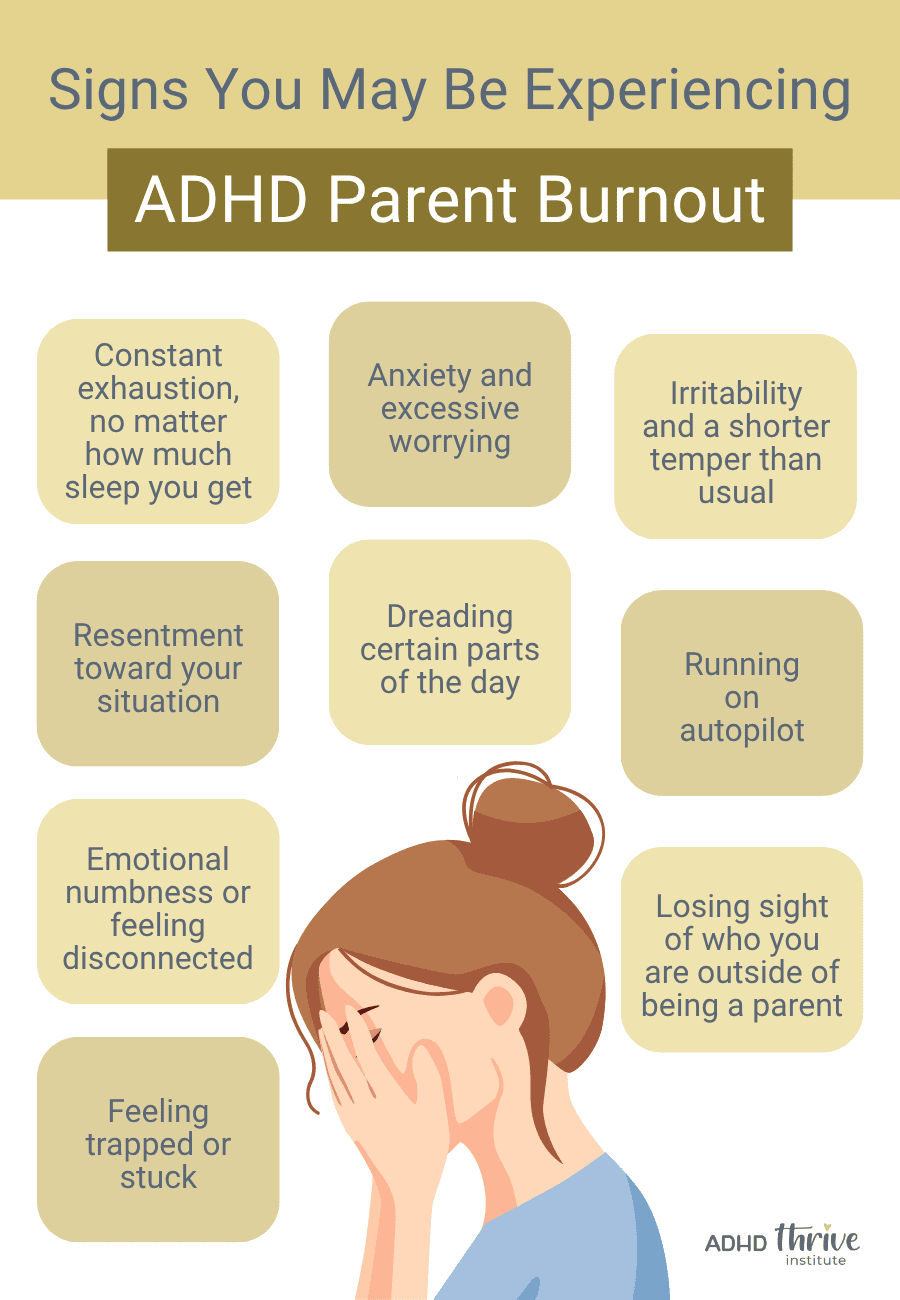
ADHD burnout can show up in many different ways, including:
- constant exhaustion, no matter how much sleep you get
- anxiety and excessive worrying
- irritability and a shorter temper than usual
- resentment toward your situation
- dreading certain parts of the day
- running on autopilot
- emotional numbness or feeling disconnected
- feeling trapped or stuck
- losing sight of who you are outside of being a parent
Many parents also carry a tremendous amount of guilt. They feel guilty for being frustrated. Guilty for wanting a break. Guilty for feeling resentful. Guilty for not enjoying every moment of parenting.
But these feelings don't mean you're a bad parent, and they certainly don't mean you don't love your child. In fact, many of the parents who experience the deepest burnout are the ones who care the most. They're constantly giving, helping, advocating, researching, worrying, and trying to do everything possible for their child.
Eventually, that level of responsibility can become overwhelming. If that's where you find yourself right now, the first step is recognizing that what you're feeling is far more common among ADHD parents than most people realize.
Why Parenting a Child With ADHD Can Feel So Much Harder
Parenting a child with ADHD is often harder than parenting a neurotypical child. This is because ADHD creates challenges that many other families simply aren't dealing with on a daily basis.
Parents of children with ADHD are often carrying a heavier mental, emotional, and logistical load than they realize, and over time, that load can become exhausting.
- Constant Decision Fatigue
Many parents of children with ADHD feel like they can never fully relax. You're constantly monitoring, redirecting, problem-solving, thinking three steps ahead, and trying to prevent the next conflict before it happens.
From reminding your child to complete basic tasks to helping them navigate emotions, friendships, schoolwork, and daily routines, the mental load can feel relentless.
By the end of the day, many parents feel completely depleted—not because of one major event, but because of the hundreds of small decisions they've had to make all day long.
- The Emotional Roller Coaster
ADHD often comes with emotional highs and lows that affect the entire family. One day things may seem to be improving. The next day you receive another call from school. There may be meltdowns, emotional outbursts, sibling conflicts, behavioral challenges, or struggles that seem to appear out of nowhere.
Over time, many parents begin to feel like they're riding an emotional roller coaster they never agreed to get on.
It's difficult to fully relax when you're constantly wondering what challenge might be waiting around the next corner.
- Living in Crisis Mode
For many ADHD families, life can start to feel like one long emergency. You're always reacting, troubleshooting, and trying to put out the next fire.
Maybe you're worried about your child's behavior at school. Maybe you're concerned about friendships. Maybe you're struggling with emotional outbursts, impulsivity, sleep issues, or constant conflict at home.
When challenges happen day after day, it's easy for your nervous system to become stuck in a state of chronic stress.
Many parents describe feeling like they're always waiting for the next problem to appear, and that's an exhausting way to live.
- The Impact of ADHD on Marriage and Family Life
ADHD doesn't just affect the child. It affects the entire family. Siblings may feel frustrated when so much attention is focused on one child. Parents may disagree about discipline, treatment approaches, or how to handle difficult situations.
Stress levels rise, patience becomes harder to maintain, and relationships can begin to suffer under the weight of constant pressure.
In fact, many couples find themselves arguing more, feeling disconnected, or struggling to stay on the same page while navigating their child's symptoms.

What Does NOT Help Burnout
When parents reach the point of burnout, the natural response is often to work harder, research, and do more. Unfortunately, many of the things parents do in an effort to reduce burnout actually make it worse.
Here are a few things to avoid:
- Trying to Be a Perfect Parent
Many parents of children with ADHD place enormous pressure on themselves. They feel responsible for every behavior, every school challenge, every emotional outburst, and every setback.
If something goes wrong, they assume they must be doing something wrong.
Perfection is an impossible target. The truth is that even the most knowledgeable, patient, and loving parent will make mistakes. Every parent loses their patience sometimes. Every parent has days when they feel frustrated, overwhelmed, or unsure what to do next.
The goal isn't to be a perfect parent. The goal is to be a connected parent who keeps showing up and doing the best they can.
- Handling Everything Alone
Many ADHD parents become so focused on helping their child that they stop asking for help themselves. They convince themselves they should be able to handle it, they don't want to burden friends or family, or they assume no one else truly understands what they're going through.
But parenting a child with ADHD was never meant to be a one-person job.
Whether it's your spouse, extended family, friends, a support group, a therapist, or a community of other ADHD parents, support is critical.
In fact, one of the fastest ways to deepen burnout is to isolate yourself while trying to carry everything alone.

If you’re not sure where to find this support, start with my free ADHD parent support group on Facebook. It’s full of parents just like you, and thousands of these parents have found so much encouragement there.
- Ignoring Your Own Needs
Parents are often the last person on their own priority list.
You make sure everyone else has what they need; meanwhile, your own needs get pushed further and further down the list.
Over time, this becomes unsustainable. You cannot continually pour from an empty cup. Taking care of yourself isn't selfish. It's one of the things that allows you to continue showing up for your family.
That doesn't necessarily mean elaborate self-care routines or weekend getaways. Sometimes it simply means creating small moments throughout the day to support your own physical, emotional, and mental well-being.
- Believing It Will Get Better If You Just Try Harder
This is one of the biggest traps many ADHD parents fall into. They assume the solution is simply to work harder. Be more patient. Read more books. Try more strategies. Spend more time researching. Push through the exhaustion.
Burnout, though, is rarely solved by trying harder. In fact, trying harder often becomes part of the problem.
Sometimes what parents need isn't more effort but more support and better strategies.
What Actually Helps with Parental Burnout
If you've read this far, you might be thinking: “Okay, I understand why I'm burned out. But what do I actually do about it?”
The truth is that there isn't one magic solution. Thankfully, though, there are a few things that made a tremendous difference for me personally and for many of the families we work with.
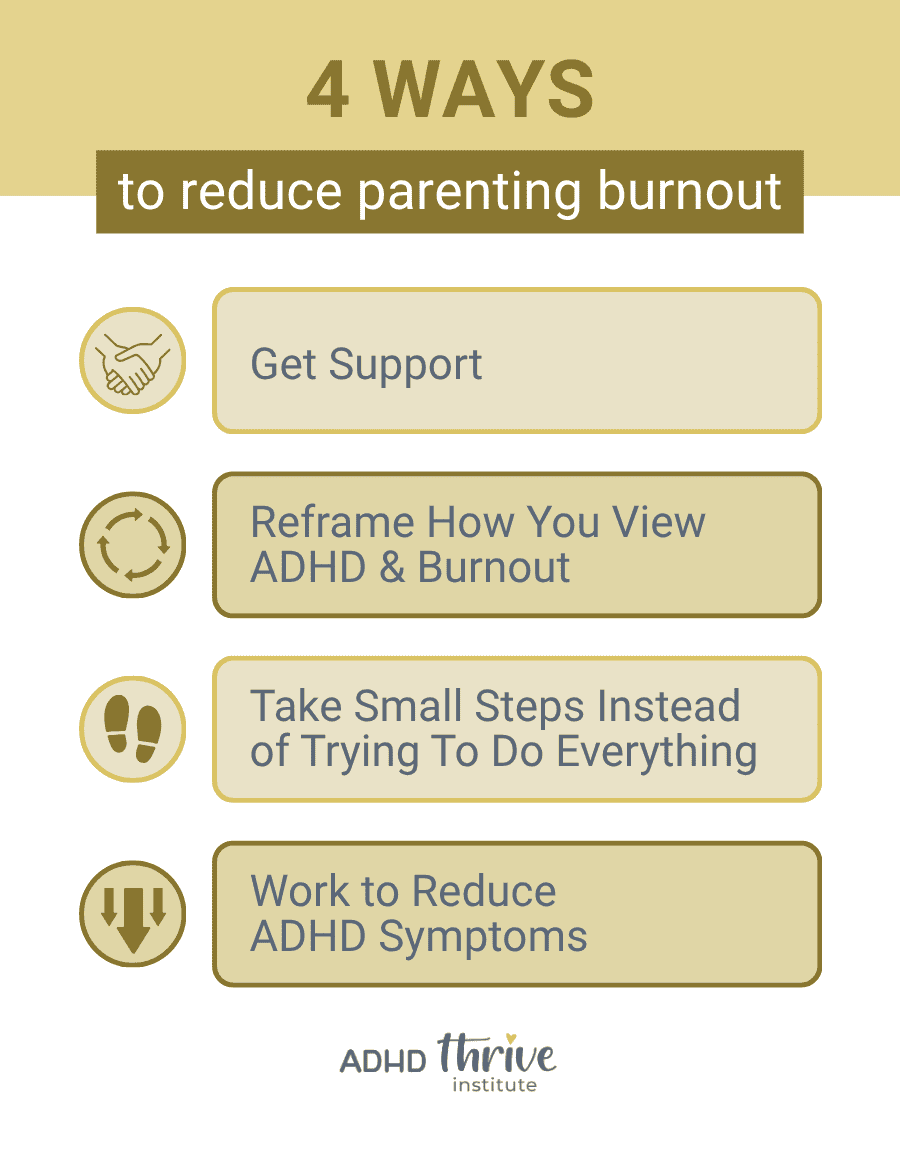
- Getting Support
One of the biggest mistakes I made early on was trying to carry everything myself.
I thought I needed to have all the answers or figure it out on my own. I thought asking for help somehow meant I was failing.
The reality was exactly the opposite.
Things began to improve when I started connecting with other parents who understood what I was going through, seeking out resources, and building a support system around our family.
If you're feeling overwhelmed right now, I highly encourage you to lean into support rather than pulling away from it. Start with my free ADHD parent support group on Facebook.
You may also find these podcast episodes on Parenting Burnout helpful:
Soaring Child Episode 141 ADHD & Burnout with Dr. Tricia Pingel
Soaring Child Episode 94 Strategies to Combat Parenting Burnout with Ashley Gobeil
Soaring Child Episode 43 Overcoming Burnout with David Greenwood
Each episode explores different aspects of the stress, overwhelm, and challenges that ADHD parents often face.
Sometimes simply realizing that other parents are experiencing similar struggles can be incredibly validating.
- Reframing How You View ADHD and Burnout
For years, I thought the answer was simple: I needed to DO MORE (be more patient, more resilient, more organized, more disciplined, etc).
But over time, I realized that burnout isn't just about the parent
Burnout is a symptom too.
It’s a symptom of an entire family system that is under constant stress.
Think of it this way: Behavior often drives burnout, and when symptoms improve, stress often improves too.
This realization was a major turning point for me because it shifted me out of self-blame and into problem-solving.
Instead of constantly asking, “What's wrong with our family?” I started asking, “What is creating so much stress for our family?”
That reframed question changed everything because it forced me to start looking at what was actually driving my son’s ADHD symptoms (more on this in a moment).
- Taking Small Steps Instead of Trying to Fix Everything
When you're overwhelmed, it's easy to feel like you need to solve every problem immediately, but trying to fix everything at once often creates even more stress.
Instead, focus on one small next step.
Sometimes that next step is simply learning more about ADHD.
Sometimes it's finding support.
Sometimes it's asking for help (like, for example, by jumping on one of our free 15-minute ADHD Game Plan Calls where you can talk with me and my team about your child’s best next step).
And sometimes it's getting clarity on what might be driving your child's symptoms in the first place.
Reducing My Son's Symptoms Changed Everything
As helpful as support, mindset shifts, and small steps were, the biggest change for our family came when my son's symptoms began to improve.
My burnout wasn't happening in a vacuum. It was happening because our family was under constant stress.
As his emotional regulation improved, there were fewer meltdowns. As his impulsivity improved, there were fewer crises. As his nervous system became more regulated, life felt calmer and more manageable.
And as a result, I wasn't spending every day putting out fires. There was more peace in our home and far less survival mode.
Free ADHD Training: What's Really Driving Symptoms?
So, if symptoms are contributing to the overwhelm your family is experiencing, understanding what's driving those symptoms can be life-changing.
That's why I want to invite you to my free ADHD training.
Inside, you'll learn:
- some of the most common biological stressors that can contribute to ADHD symptoms
- why symptoms happen in the first place
- practical next steps you can take to begin supporting your child naturally
Because while parental burnout is real, there is hope, and sometimes the first step toward reducing stress isn't becoming a better parent. It's understanding what’s actually driving your child’s symptoms in the first place.
FAQs About ADHD Parent Burnout
Is ADHD parent burnout real?
Absolutely. Research shows that parents of children with ADHD often experience higher levels of stress, anxiety, and emotional exhaustion than parents of neurotypical children. The constant demands of managing symptoms, advocating for your child, and navigating daily challenges can take a significant toll over time.
Why is parenting a child with ADHD so exhausting?
Many parents describe feeling like they're always “on.” Managing impulsivity, emotional outbursts, school challenges, sibling conflict, sleep issues, and daily routines can create a level of stress that few people outside the ADHD world fully understand. Over time, that constant mental and emotional load can lead to burnout.
Can ADHD affect parents' mental health?
Yes. Parenting a child with ADHD can contribute to increased anxiety, chronic stress, overwhelm, and even symptoms of depression in some parents. That's why it's so important for parents to prioritize support for themselves while also addressing the challenges affecting the entire family.
How do I know if I'm burned out?
Common signs of ADHD parent burnout include constant exhaustion, irritability, anxiety, emotional numbness, resentment, feeling trapped, or losing sight of who you are outside of being a parent. Many parents also find themselves running on autopilot and feeling like they're simply trying to make it through each day.
What helps reduce ADHD parenting stress?
Support is important, but one of the biggest factors is reducing the overall stress on the family system. This may include connecting with other parents, creating realistic expectations, getting help when needed, and addressing the underlying factors contributing to your child's ADHD symptoms. As symptoms improve, I have seen that many families find that daily life becomes calmer, more predictable, and far less stressful.
Resources:
Bogdán PM, Varga K, Tóth L, Gróf K, Pakai A. Parental Burnout: A Progressive Condition Potentially Compromising Family Well-Being-A Narrative Review. Healthcare (Basel). 2025;13(13):1603. Published 2025 Jul 4. doi:10.3390/healthcare13131603

Hou, W et al.  Emotion dysregulation and right pars orbitalis constitute a neuropsychological pathway to attention deficit hyperactivity disorder. Nature Mental Health; 13 May 2024: DOI: 10.1038/s44220-024-00251-z

Ko W, Jeong H. Association between children with attention-deficit hyperactivity disorder and parental mental health: Data from the 2011-2020 Korea National Health and Nutrition Examination Survey. J Affect Disord. 2024 Apr 1;350:544-549. doi: 10.1016/j.jad.2024.01.123. Epub 2024 Jan 17. PMID: 38242216.

Roskam I, Brianda M-E and Mikolajczak M (2018) A Step Forward in the Conceptualization and Measurement of Parental Burnout: The Parental Burnout Assessment (PBA). Front. Psychol. 9:758. doi: 10.3389/fpsyg.2018.00758