If you’re parenting a child with ADHD, chances are you’ve already searched for answers in a variety of places: online, through parenting courses, speaking with doctors, and the list goes on. You may have even picked up an ADHD parenting book (or two or three) hoping this would be the one that finally makes things click.
But instead, many parents walk away feeling the same way: still overwhelmed and still wondering why nothing seems to truly change, even when you try the strategies recommended by the experts.
Why Most ADHD Parenting Books Leave Parents Stuck
The truth is, many ADHD parenting books focus heavily on managing behavior. They offer strategies like reward charts, consequences, routines, and scripts for what to say in difficult moments. While those tools can definitely be helpful, they only address what’s happening on the surface.
What’s often missing is a deeper look at what’s driving the behavior in the first place.
What Parents Are Really Searching For
Today, more and more parents are asking a different set of questions:
- Are there natural ADHD solutions that actually work?
- Is there natural ADHD support beyond just managing behavior?
- Are there alternatives to medication we can explore first (or alongside it)?
- How do I actually help my child thrive with ADHD, not just cope with it?
There’s a clear shift happening. Parents are moving away from a model that focuses only on controlling behavior and toward one that looks at how to support the brain and body behind the behavior.
That’s where a different kind of ADHD parenting book comes in.
What Makes a Great ADHD Parenting Book?
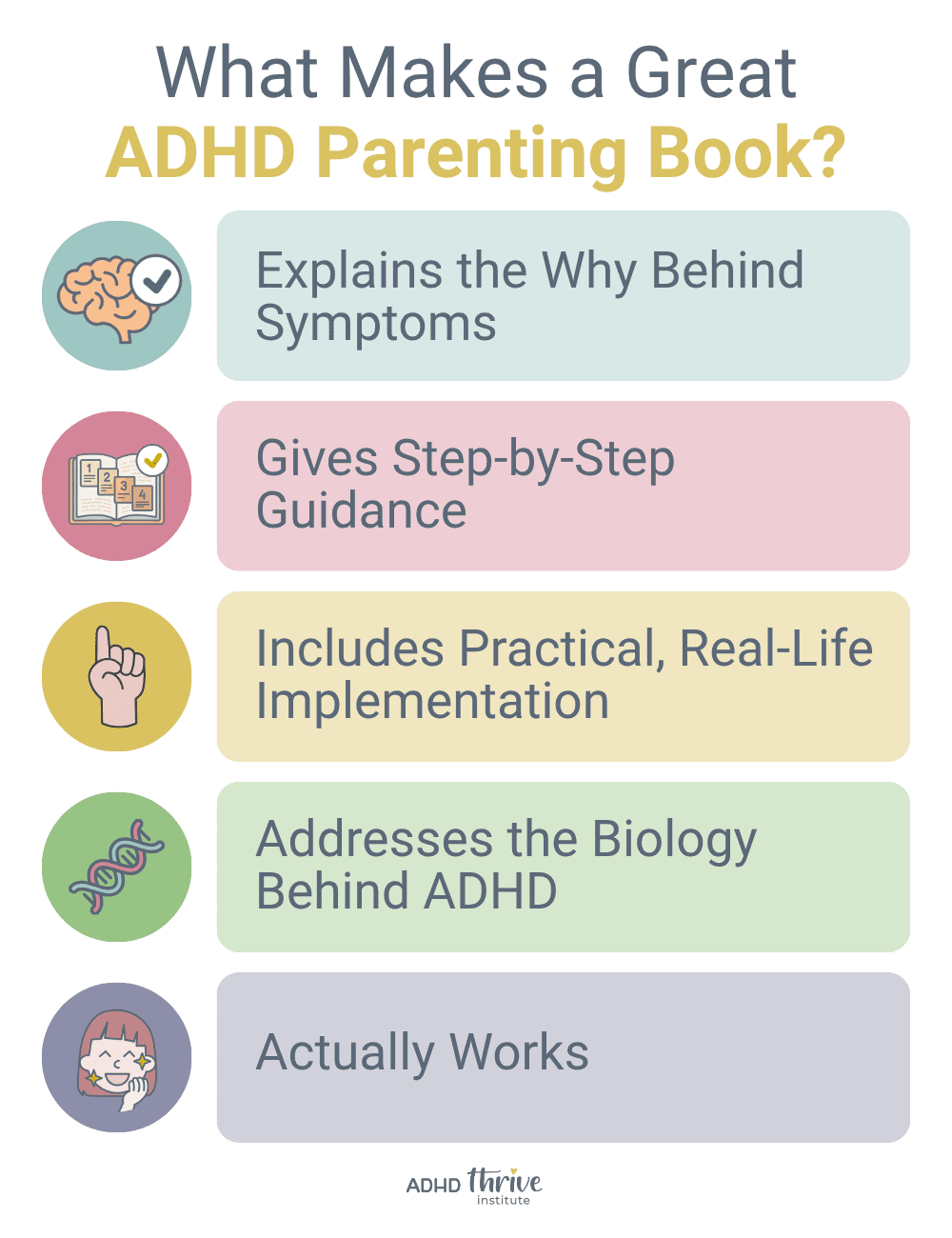
With so many ADHD books for parents available, it can be hard to know which ones will actually help and which ones will leave you feeling just as stuck as before.
A truly helpful ADHD parenting book doesn’t just give you more strategies to try. It helps you understand your child on a deeper level and shows you exactly what to do next.
Here are a few things to look for:
- It Explains the Why Behind Symptoms
The best ADHD books help you understand why symptoms are happening in the first place, whether that’s related to brain chemistry, nervous system regulation, or underlying biological stressors. When you understand the “why,” your decisions as a parent become much easier to navigate.
- It Gives Step-by-Step Guidance
Parents don’t just need information (they already have plenty of that!). Instead, they need a clear plan. A great ADHD parenting book should walk you through where to start, what to change next, and how to build momentum over time.
Instead of leaving you with a long list of ideas, it should help you take focused, manageable steps that actually move things forward.
- It Includes Practical, Real-Life Implementation
Even the best advice won’t help if it’s not realistic. The most effective books provide strategies that are easy to follow and doable in a busy household.
Parenting a child with ADHD doesn’t happen in a perfect environment. It happens during hectic school mornings, busy evenings, and stressful moments. The support needs to work there too.
- It Addresses the Biology Behind ADHD
This is where many books fall short. A truly impactful ADHD parenting book looks beyond behavior and considers what’s happening inside the body, including nutrition and food choices, gut health, key nutrients needed for brain function, and other biological stressors.
Remember, ADHD is not just about behavior but also about how the brain and body are functioning together.
- It Actually Works
Ultimately, the best ADHD parenting books are the ones that create real change in everyday life, not just in theory. At the end of the day, parents aren’t just looking for information. They’re looking for something that actually works.
A Different Kind of ADHD Book: Thriving with ADHD
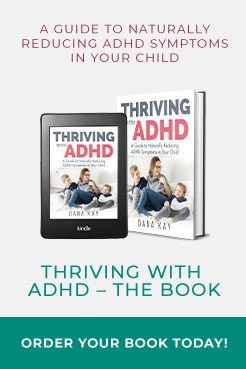
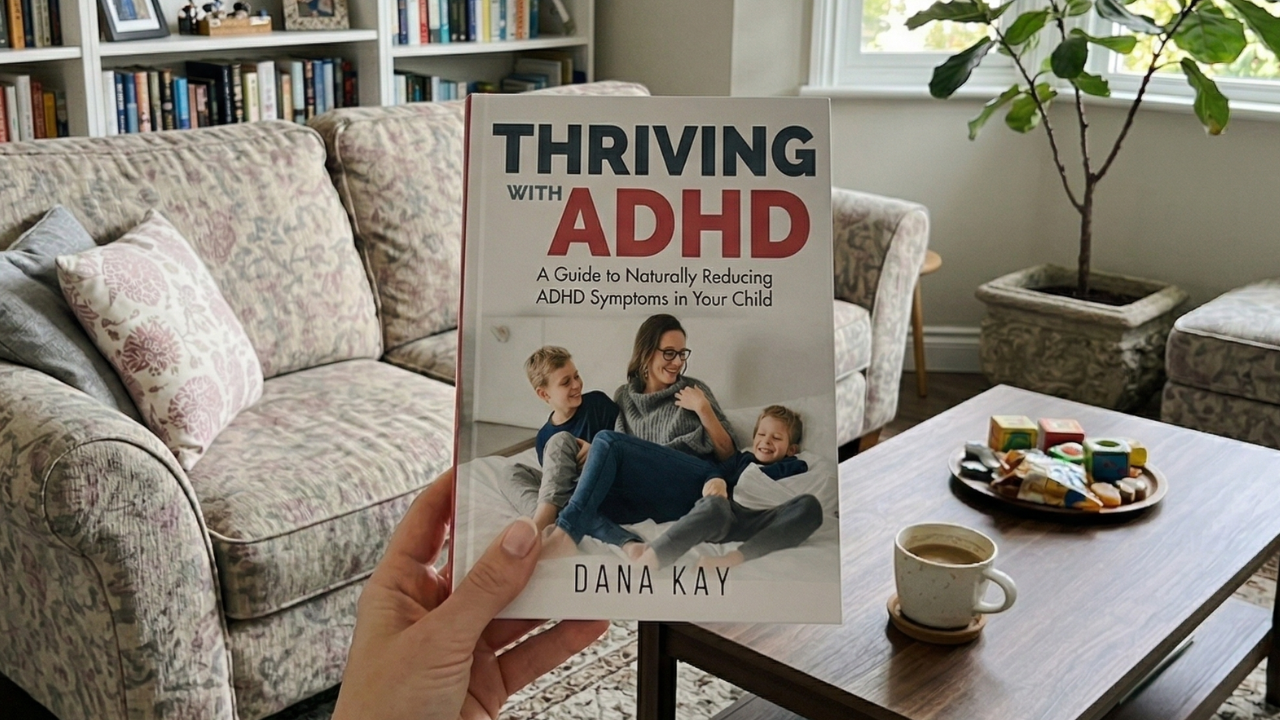
Once you understand what makes a great ADHD parenting book, you start to see why so many parents are looking for something different and why I wrote Thriving with ADHD.
This isn’t a book about managing behavior. It’s a step-by-step guide to helping parents support the entire child, starting with one of the most overlooked pieces: food.
Food First: Addressing One of the Most Common Underlying Stressors of ADHD Symptoms
In Chapter 1, we start with a question that is rarely asked: Why is medication often the first step instead of looking at food?
Food directly impacts brain chemistry, inflammation, and neurotransmitters like dopamine. For many children, what they eat every day can either support focus and regulation or make symptoms worse. This chapter walks through not only the science, but also real stories of families who began to see changes when they shifted their approach.
The ADHD Diet: What to Remove and What to Add
From there, the book moves into a clear, practical plan. In Chapters 2 and 3, you’ll learn:
- Which foods are most commonly linked to increased ADHD symptoms
- The role of sugar and artificial food dyes in behavior and focus
- What to feed your child instead, with real food swaps that support the brain
These chapters help parents understand which foods may be increasing stress on their child’s system and what to replace them with.
Beyond Diet: Superfoods, Supplements, and Hidden Triggers
Once the foundation is in place, the book goes deeper. You’ll learn about:
- Superfoods that support brain function and reduce inflammation
- Hidden sources of common trigger foods that often sneak into a child’s diet
- Supplements for ADHD kids that can support focus, mood, and regulation when used appropriately
This helps parents move from “we’re trying to eat healthier” to a much more targeted, supportive approach.
Real Life Matters: Meal Planning, Budget, and Picky Eating
Of course, knowing what to do is one thing. Actually doing it in real life is another. That’s why a large part of Thriving with ADHD focuses on making these changes realistic and sustainable for families. Remember, if a plan doesn’t work in real life, it doesn’t work at all.
Inside, you’ll find support for:
- Meal planning that reduces stress and last-minute decisions
- Making healthier choices affordable and manageable
- Navigating family resistance when not everyone is on board
- Helping even picky eaters expand their food choices
When Food Isn’t Enough
For some children, food changes create significant improvements. For others, they’re just one piece of the puzzle. That’s why the final section of the book introduces functional lab testing.
In Chapter 12, you’ll learn how to look deeper at what may be affecting your child’s biology, including nutrient deficiencies, gut health issues, toxin exposure, and other underlying stressors like mold, parasites, yeast overgrowth, etc.
Who This Book Is For
Thriving with ADHD was written for parents who want a clear path forward when they feel like they’ve tried everything and are tired of guessing what to do next.
It’s for:
- Parents who feel overwhelmed by ADHD and unsure where to start
- Parents who feel like nothing is truly working long-term
- Parents who are looking for natural ADHD solutions beyond just managing behavior
- Parents who are tired of constant battles, meltdowns, and daily stress
If that sounds familiar, this book is designed to give you a clear path forward. Many parents who implement the changes this book recommends begin to notice calmer behavior and fewer emotional outbursts, better focus and improved attention, easier transitions, and a growing sense of confidence as a parent, knowing what to do and why it works.
Where to Get the Book
If you’ve been searching for a practical, natural ADHD parenting approach, this is where to start.
You can get your copy of the Thriving with ADHD eBook here for a special $5.00 rate.
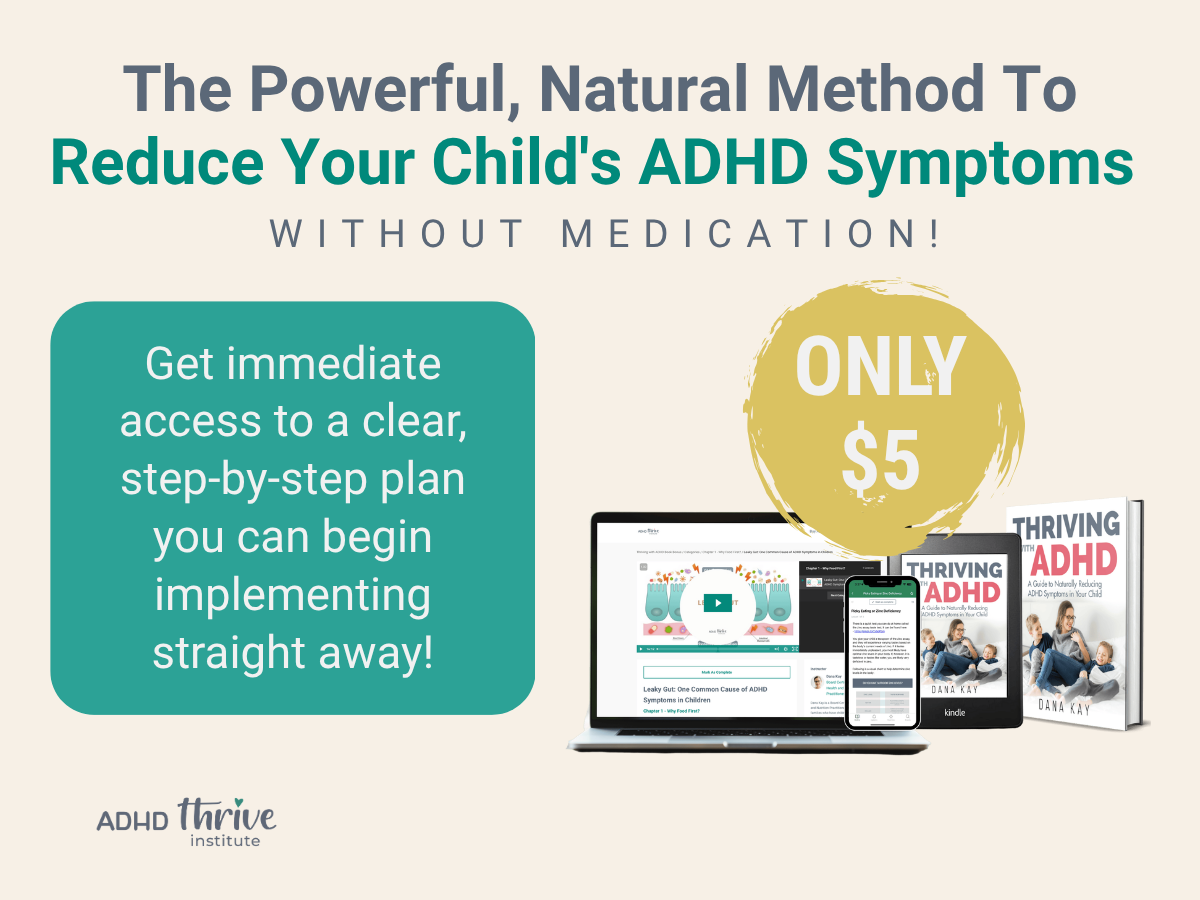
This option allows you to get the book at a reduced price and gives you immediate access to a clear, step-by-step plan you can begin implementing right away.
Or, if you’d prefer to learn more about the book first, you can visit https://adhdthriveinstitute.com/book/
Or you can grab a paperback on Amazon.
No matter where you start, just start today. This next step will help you move from feeling stuck and overwhelmed to having a clear path forward in supporting your child with ADHD.
FAQs About ADHD Books for Parents
What is the best ADHD parenting book?
The best ADHD parenting book is one that helps you understand why your child’s symptoms are happening and gives you a clear, practical plan to support them. Many parents look for books that go beyond behavior strategies and include guidance on nutrition, lifestyle, and underlying biological stressors that may be affecting their child.
Are there natural ADHD books?
Yes, there are ADHD books that focus on natural approaches, including nutrition, lifestyle changes, and supporting the brain and body. These books often explore topics like food sensitivities, gut health, and key nutrients that play a role in focus, mood, and regulation, offering parents additional options alongside or beyond medication.
Can books really help ADHD?
Books can be incredibly helpful when they provide clear guidance and practical steps that parents can implement at home. While a book won’t “fix” ADHD on its own, it can give you the tools, understanding, and confidence to make changes that support your child.
What should parents look for in an ADHD book?
Parents should look for an ADHD book that:
- Explains the why behind symptoms
- Offers step-by-step, easy-to-follow strategies
- Includes real-life implementation and research, not just theory
- Addresses both behavior and biology
The most helpful books give parents a clear path forward, not just more information.
Can diet help ADHD?
Research and clinical experience suggest that diet can play a role in ADHD symptoms for some children. Certain foods (such as those containing artificial dyes, added sugars, or common sensitivities like gluten and dairy) may impact behavior in some kids. Supporting the body with nutrient-dense foods can help improve overall brain function and regulation.
Are there alternatives to ADHD medication?
Yes, many families explore additional or complementary approaches to ADHD, including nutrition, lifestyle changes, behavioral strategies, and targeted supplementation. While medication can be helpful for some children, and I’m not against medication in all cases, I don’t believe it should always be the first port of call for ADHD. Many families benefit from a more holistic approach that focuses on supporting the brain and body. It’s always best to work with a qualified healthcare professional when making decisions about treatment.