

“My child could play video games all day if I let them.”
If you’re raising a child with ADHD, that sentence probably feels very familiar.
Many parents notice that their ADHD child seems especially drawn to video games, tablets, or screens. Turning the game off can lead to arguments, emotional meltdowns, or endless negotiations for “just five more minutes.” At the same time, parents often wonder how much is too much.
Some experts warn that screen time worsens ADHD symptoms (and there is definitely research to back this up. Keep reading for more). Others argue that gaming is simply part of modern childhood and not something parents should panic about.
What does the research actually say? Are kids with ADHD more likely to become addicted to gaming? Can excessive screen time make ADHD symptoms worse? How much gaming is too much for an ADHD child? We’ll answer these questions (and more) in this article.
Understanding why ADHD brains are so drawn to gaming and how screen time affects symptoms can help parents make more informed decisions about how to manage it. In this article, we’ll look at what the research actually shows about gaming and ADHD, why video games can be especially appealing to ADHD brains, and how parents can create healthier screen habits without constant battles at home.
Why Kids With ADHD Are Drawn to Video Games
If you’ve ever watched your child struggle to focus on homework but then play a video game for hours with intense concentration, it can feel confusing and frustrating, but when you understand how the ADHD brain works, this pattern makes more sense.
At the center of the connection between gaming and ADHD is a brain chemical called dopamine.
The ADHD Brain and Dopamine
Dopamine plays a key role in the brain’s motivation, reward, and focus systems. It helps us feel interested in tasks, stay engaged, and experience a sense of satisfaction when we accomplish something.
Research suggests that people with ADHD often have differences in dopamine regulation, which can make everyday tasks feel less stimulating or rewarding. Activities that are slower, repetitive, or require sustained effort (for instance, things like homework, chores, or studying) may simply not provide enough dopamine to hold the brain’s attention.
As a result, ADHD brains are naturally drawn toward activities that provide stronger or more immediate dopamine rewards. This is where video games come in.
Video Games Are Designed to Deliver Frequent Rewards
Modern video games are intentionally designed to be highly engaging. Game developers carefully build systems that reward players frequently and keep them motivated to continue playing.
Many games provide:
- Instant rewards for completing tasks
- Constant novelty with new levels, characters, or challenges
- Rapid feedback that tells players immediately how they are doing
- Escalating challenges that keep the brain engaged
These features create a steady stream of dopamine signals in the brain. For a child with ADHD, this environment can feel incredibly satisfying and motivating. Compared to slower activities like reading, homework, or chores, video games offer a much more powerful reward loop.
Hyperfocus and Gaming
Another reason gaming can hold a child’s attention for long periods of time is a phenomenon often seen in ADHD called hyperfocus. While ADHD is commonly associated with distractibility, many children with ADHD can actually focus very intensely on activities that are highly stimulating or rewarding.
Video games combine several elements that can trigger hyperfocus: clear goals, immediate feedback, fast-paced stimulation, and constant novelty. Once an ADHD brain locks onto an activity like this, it can become deeply absorbed, sometimes to the point that it’s difficult to notice time passing or respond to outside requests.
This is why many parents find that their child can concentrate on a game for hours, yet struggle to maintain attention during less stimulating tasks.
What Research Says About Gaming and ADHD

Because video games are so engaging for ADHD brains, many parents wonder whether gaming is harmful for children with ADHD or whether it might even cause ADHD symptoms in the first place.
The research on this topic is still evolving, but several patterns have emerged.
- ADHD Kids Are More Likely to Develop Gaming Problems
A number of studies have found that children and adolescents with ADHD are more likely to develop problematic gaming behaviors compared to their peers.
For example, a systematic review published in Developmental Medicine & Child Neurology in 2018 found that ADHD is one of the strongest risk factors associated with Internet Gaming Disorder, a condition characterized by excessive gaming that interferes with daily life. More recent systematic reviews in adults also confirm a direct association between ADHD symptoms and the severity of Internet Gaming Disorder or Gaming Disorder, reinforcing the idea that ADHD is a significant vulnerability factor across the lifespan.
Research has also shown that symptoms such as impulsivity and reward-seeking (both common in ADHD) are strongly linked to higher rates of problematic gaming. In fact, some studies suggest that individuals with ADHD have substantially higher odds of developing problematic or disordered gaming compared to those without ADHD, with several papers reporting roughly two‑fold or greater increases in risk.
This doesn’t mean every child with ADHD will struggle with gaming, but it does suggest that ADHD brains may be more vulnerable to the reward systems that video games are designed to activate.
- Excessive Gaming Can Worsen ADHD Symptoms
Research also suggests that excessive gaming or screen time may worsen certain ADHD-related challenges, particularly when it begins to crowd out sleep, physical activity, and other important parts of daily life.
For example, a 2022 systematic review of longitudinal studies found reciprocal associations between digital media use and ADHD symptoms. Children with more ADHD symptoms were more likely to develop high or problematic media use over time, and problematic media use predicted later increases in ADHD symptoms.
Heavy gaming has also been linked to several factors that can make ADHD symptoms harder to manage, including:
- Sleep disruption, especially when gaming occurs late in the evening
- Attention difficulties, particularly with slower-paced tasks like schoolwork
- Emotional regulation challenges, including irritability or frustration when screen time ends
One of the most well-documented concerns is sleep disruption. Research shows that screen exposure in the evening can suppress melatonin production and delay sleep onset, which can lead to shorter sleep duration and poorer sleep quality in children and adolescents. Because sleep plays a critical role in attention, mood regulation, and impulse control, poor sleep can significantly worsen ADHD symptoms the following day.
Researchers have also suggested that fast-paced digital media may influence attention patterns over time. Activities like video games deliver rapid feedback, constant stimulation, and immediate rewards. In contrast, many real-world tasks (such as reading, homework, or classroom learning) move much more slowly.
Some researchers have raised concerns that repeated exposure to fast‑paced, highly stimulating media may contribute to attention patterns that make it harder for some children to stay engaged with slower, real‑world tasks, although this remains an area of active debate and investigation.
Finally, as mentioned above, video games stimulate the brain’s dopamine reward system, delivering frequent bursts of reward and novelty. When gaming ends, the sudden drop in stimulation can leave some children feeling irritable or restless, which may contribute to emotional outbursts or difficulty transitioning away from screens.
- But Video Games are not the Sole Cause of ADHD
One important point that most researchers and clinicians emphasize is that ADHD is primarily a neurodevelopmental condition with strong genetic and neurological foundations. While some newer studies (like a 2024 Mendelian randomization study, for example) suggest that higher levels of certain types of screen time may increase the risk of childhood ADHD, this research is still emerging and does not necessarily show that gaming alone directly “causes” ADHD.
While excessive screen time appears to exacerbate attention and emotional regulation difficulties, and may contribute to ADHD risk in some children, current evidence still supports genetics and brain development as the primary drivers of ADHD.
In other words, gaming is a factor in ADHD, but it’s not the only factor.
Understanding this distinction can help parents approach the topic of gaming with more clarity and nuance. The goal is not necessarily to eliminate video games entirely, but to understand how they interact with the ADHD brain and create healthy boundaries that support a well-regulated nervous system.
When Gaming Becomes a Problem
For many families, video games in moderation can be a normal part of childhood. The goal isn’t necessarily to eliminate gaming entirely, but to pay attention to how your child responds to it.
In some cases, gaming begins to affect a child’s mood, behavior, or daily functioning. When that happens, it may be a sign that the brain is becoming overly dependent on the dopamine stimulation that gaming provides.
Here are some common red flags that gaming may be contributing to dysregulation in your child’s daily life:
- Meltdowns when gaming ends
- Loss of interest in other activities they previously enjoyed
- Sleep disruption, especially difficulty falling asleep after gaming
- Constant bargaining or negotiating for more screen time
- Difficulty transitioning away from the game, even with warnings
Many parents notice that the biggest conflict happens when it’s time to stop playing. Some clinicians describe this as a kind of “dopamine drop”: the brain has been receiving frequent rewards and stimulation, and when that stops abruptly, some children feel restless, irritable, or frustrated.
In other words, the emotional reaction you might see in your child when turning off a game is not just about the game ending. It’s about the brain suddenly losing a powerful source of stimulation.
This is why transitions away from gaming can be particularly difficult for children with ADHD. Their nervous system has been operating in a high-stimulation environment, and shifting back to everyday activities can feel like slamming on the brakes.
Recognizing these patterns can help parents identify when gaming may be crossing the line from entertainment into dysregulation, and when it might be time to introduce clearer boundaries around screen use.
How Much Screen Time Is Healthy for ADHD Kids?
So, how much screen time is actually okay for a child with ADHD? The honest answer is that there is no ADHD-specific number that works for every child.
Most experts, including the American Academy of Pediatrics (AAP), have moved away from a one-size-fits-all hourly limit for older children and instead encourage families to focus on how screens are affecting the child’s functioning, including sleep, mood, movement, school, and relationships.
Recent explanations of AAP recommendations emphasize that screens should not replace sleep, physical activity, family connection, or offline play, and suggest creating individualized family media plans rather than strict one‑number limits for older children.
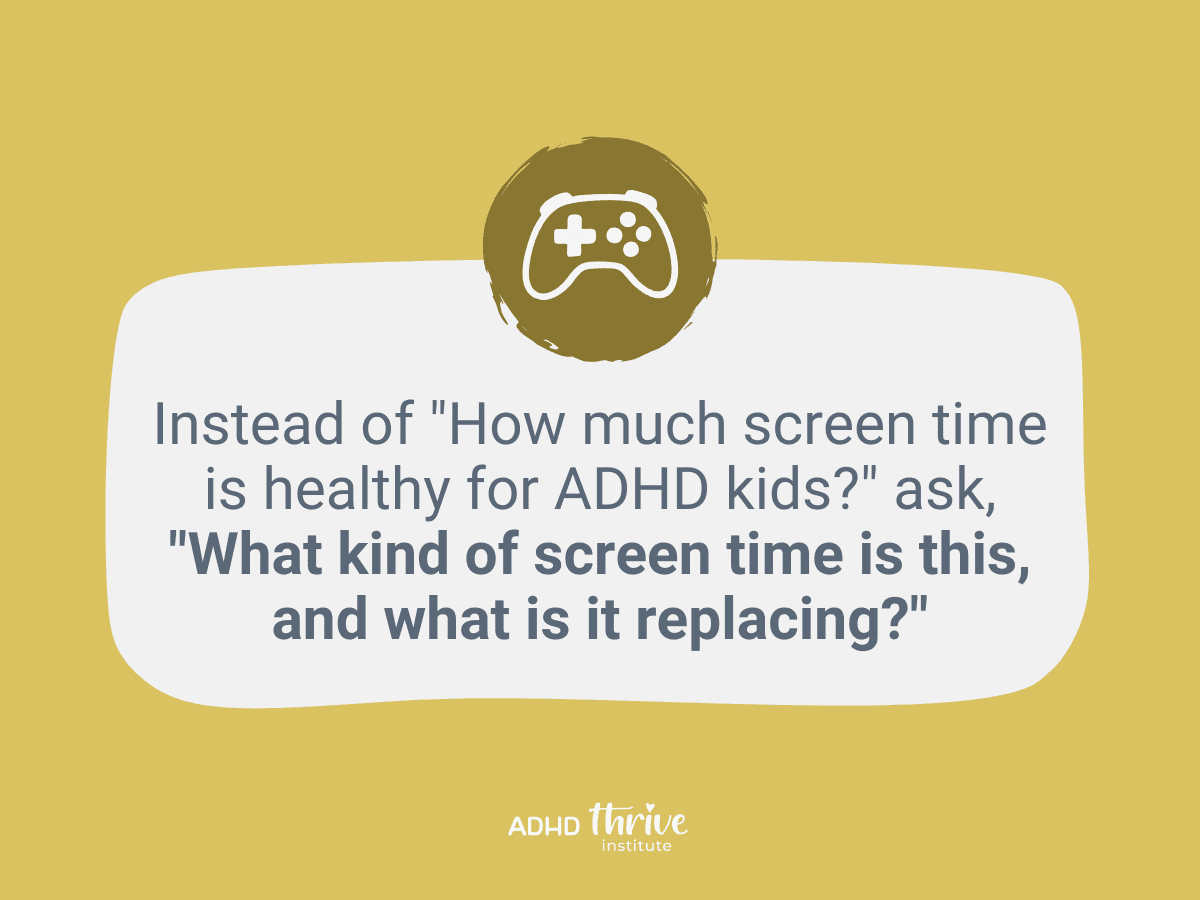
In other words, the question is not just, “How many hours?” but also, “What kind of screen time is this, and what is it replacing?”
What the AAP Recommends
The AAP’s guidance can be summarized like this:
- For children under 18–24 months, avoid digital media other than video chatting.
- For children ages 2–5, aim for about 1 hour per day of high-quality programming, ideally with adult involvement.
- For older children and teens, the focus shifts away from a strict universal limit and toward consistent boundaries that protect sleep, physical activity, family connection, and school functioning.
For kids with ADHD, that last point matters a lot, because even if two children have the same number of screen hours, the ADHD child may be more sensitive to the effects on sleep, transitions, emotional regulation, and attention.
Quality Matters Just as Much as Quantity
Not all screen time affects the brain in the same way. A child doing a slow-paced educational program with a parent is having a very different nervous system experience than a child playing a highly stimulating, reward-heavy video game for two hours.
That’s why it helps to think about screen time in categories.

- Interactive vs. Passive Screen Time
Interactive screen time includes things like video games, creative building games, drawing apps, and educational games. Passive screen time includes things like YouTube scrolling, binge-watching shows, and endless short-form videos.
Interactive media can be more engaging, but it can also be more stimulating and harder to stop. Passive media may seem calmer, but fast-cut or algorithm-driven content can still overstimulate attention systems.
- Gaming vs. Social Media
Gaming and social media also affect kids differently. Gaming tends to deliver instant rewards, clear goals, rapid feedback, and novelty, making it especially compelling for ADHD brains. Social media often adds another layer: comparison, emotional intensity, and endless scrolling, which can affect mood and self-esteem in older kids and teens.
So while both fall under “screen time,” they are not identical experiences.
- Educational vs. Fast-Paced Content
A slow, educational program is not the same as a fast-paced game or rapid-fire video stream. Faster, more stimulating media may make it harder for some children to shift back into slower real-world tasks like homework, chores, reading, or getting ready for bed.
That doesn’t mean all fast-paced content is “bad.” It means parents need to pay attention to what happens after the screen turns off.
A Better Question to Ask
For ADHD kids, the most useful question is often: Is this screen time helping, neutral, or hurting my child’s regulation?
You may need tighter limits if screen time is leading to any of the following:
- sleep disruption
- bigger meltdowns when it ends
- constant bargaining
- reduced interest in offline play
- more irritability or emotional crashes
So how much screen time is healthy for ADHD kids? A research-informed answer would be: Enough that it doesn’t interfere with sleep, movement, school, emotional regulation, or family life.
That number will vary from child to child. For one child, that may mean a short, structured daily gaming window. For another, it may mean screens are best kept to weekends or limited to certain types of content.
How to Manage Screen Time With ADHD Kids
Once parents understand why gaming is so compelling for ADHD brains, the next question becomes: How do we manage it without constant battles?
Most experts agree that the goal is not to eliminate screens entirely. Screens are now part of everyday life for school, social connection, and entertainment. Instead, the focus should be on creating predictable structures around screen use so that gaming fits into a healthy daily rhythm rather than taking over it.
Here are several strategies that research and clinical experience suggest can be especially helpful for children with ADHD.
- Create Predictable Screen Time Windows
One of the most effective ways to reduce conflict is to make screen time predictable instead of negotiable. Rather than deciding in the moment whether your child can play, consider setting a regular window such as after homework is finished, after outdoor play, or during a specific time of day.
When screen time happens at a predictable time, it becomes part of the routine instead of something children have to bargain for constantly.
- Give Transition Warnings Before Screens End
Transitions can be particularly difficult for ADHD brains. Going from a highly stimulating game to a less exciting activity can feel abrupt. Giving clear warnings before screen time ends can help the brain prepare for the transition.
For example: “You have 10 more minutes.” Then, “Five minutes left.” Then, “Two more minutes, then the game turns off.” This gradual countdown can make it easier for children to shift gears.
- Avoid Screens Close to Bedtime
As already mentioned, research consistently shows that screen exposure in the evening can interfere with sleep by suppressing melatonin production and delaying sleep onset. Because sleep is already a common challenge for children with ADHD, many experts recommend turning off screens at least 1–2 hours before bedtime whenever possible.
Replacing late-evening gaming with calmer activities like reading, drawing, or quiet play can help support better sleep.
- Balance Screens With Movement and Offline Activities
Children with ADHD benefit from plenty of opportunities for physical movement, outdoor play, and creative activities that engage the body as well as the brain. If gaming begins to crowd out these experiences, it may be a sign that screen habits need adjusting.
A helpful way to think about it is balance rather than restriction. Screens work best when they are one part of a child’s day, not the main event.
Helpful Resources for Parents about Screen Time & ADHD Kids
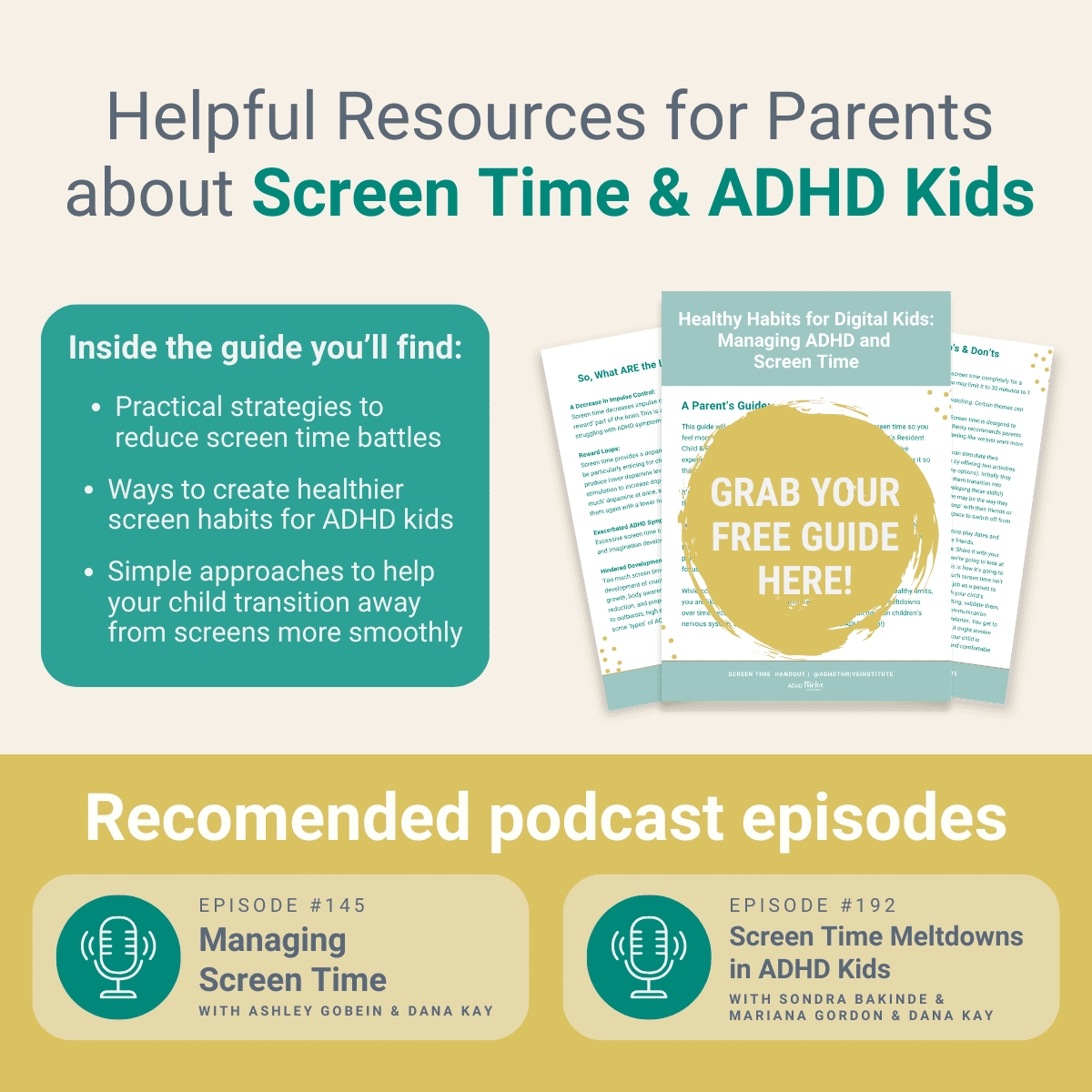
Screen time battles are one of the most common struggles parents of ADHD kids report. To make this easier, we partnered with Child and Family Therapist Ashley Gobeil to create a free guide called “Healthy Habits for Digital Kids: Managing ADHD & Screen Time.”
Inside the guide you’ll find:
- practical strategies to reduce screen time battles
- ways to create healthier screen habits for ADHD kids
- simple approaches to help your child transition away from screens more smoothly
You can download the free guide here.
Or, we also have a couple of podcasts on this topic. Tune in to these episodes at the links below:
Episode 145: Managing Screen Time and ADHD with Ashley Gobeil
Episode 192: Screen Time Meltdowns in ADHD Kids with Sondra Bakinde and Mariana Gordon
Many parents find that when screen time is managed intentionally, it can become something families navigate together rather than something they fight about every day.
Gaming and ADHD: The Bigger Picture
When conversations about gaming and ADHD come up, it’s easy to focus only on the screens themselves, but in many cases, addictive behavior is just one piece of a much bigger picture.
For some children, intense attraction to screens, emotional meltdowns when gaming ends, or difficulty focusing on non-screen activities may reflect more than just a love of video games. These behaviors can also be amplified when the nervous system is already under stress.
In the ADHD Thrive framework, we often see that certain biological stressors can make regulation much harder for children. When the body is under strain, challenges with attention, mood, and impulse control can become more pronounced.
When these underlying biological factors are addressed, many parents notice that their child’s overall regulation improves. Attention becomes easier, emotional reactions soften, and transitions (including turning off screens) can become less explosive.
As we often say, Behavior is biology.
While healthy screen boundaries are important, it’s equally important to look at the biological environment inside the body that supports attention, emotional regulation, and resilience.
When the brain and nervous system are properly supported, children are often better able to navigate the modern digital world in a balanced and healthier way. To learn more about biological stressors that can exacerbate ADHD symptoms, watch my free ADHD masterclass here.
FAQs About Gaming and ADHD
Do video games make ADHD worse?
Yes, excessive gaming can exacerbate ADHD symptoms. Research suggests that heavy screen use can interfere with sleep, attention regulation, and emotional control, especially when gaming replaces sleep, movement, or other important activities. For many families, the key is moderation and structure, rather than eliminating gaming entirely.
Are kids with ADHD more likely to get addicted to video games?
Yes, research suggests that children with ADHD may be more vulnerable to problematic gaming behaviors. Studies have found that ADHD is one of the strongest risk factors associated with Internet Gaming Disorder. Because video games provide frequent rewards and stimulation, they strongly activate dopamine pathways in the brain, which may make them particularly appealing for children with ADHD.
How much screen time should ADHD kids have?
There is no single screen time limit that works for every child with ADHD. The American Academy of Pediatrics recommends focusing less on a strict number of hours and more on how screen use affects sleep, school, physical activity, and family life. For many families, structured screen time windows, combined with clear boundaries around bedtime and daily routines, can help create a healthier balance.
Can screen time cause ADHD?
Current research suggests that heavy screen use is associated with a higher risk of ADHD symptoms, and newer genetic studies indicate that prolonged television and mobile phone use may contribute to ADHD risk at a population level. However, these findings do not mean that everyday screen use alone directly causes ADHD in an individual child; genetics and brain development remain the primary drivers.
What the newer studies actually show:
- A 2024 Mendelian randomization study found that more time watching TV and using mobile phones appears to increase the risk of childhood ADHD at a population level, suggesting some causal contribution of certain kinds of screen time overall.
- A 2022 systematic review of longitudinal studies concluded that the relationship between digital media use and ADHD symptoms is reciprocal: kids with more ADHD symptoms are more likely to develop heavy/problematic media use, and problematic (not just frequent) digital media use can, in turn, increase later ADHD symptoms, partly via sleep and social impacts.
- The Ra et al. 2018 JAMA cohort (teens without ADHD at baseline) found that frequent use of multiple digital media activities was associated with higher odds of developing ADHD symptoms over 24 months, but this is still framed as an association, not definitive individual‑level causation.
These findings support the idea that certain types and amounts of screen time can contribute to ADHD risk and symptom severity, especially when use is heavy, problematic, or displaces sleep and other healthy activities. They do not show that gaming by itself straightforwardly “causes ADHD” in the same way that, say, a genetic variant or prenatal exposure might.
Why do ADHD kids love video games so much?
Video games are designed to provide constant stimulation, rapid feedback, and frequent rewards, which activate the brain’s dopamine system. Because ADHD involves differences in dopamine regulation, activities that provide immediate rewards can feel especially engaging and motivating. This is also why many children with ADHD can become deeply absorbed in games through a phenomenon known as hyperfocus.
Resources:
Christakis DA, Zimmerman FJ, DiGiuseppe DL, McCarty CA. Early television exposure and subsequent attentional problems in children. Pediatrics. 2004 Apr;113(4):708-13. doi: 10.1542/peds.113.4.708. PMID: 15060216.

Children’s Hospital of Orange County. Feb 10, 2026 https://health.choc.org/updated-aap-recommendations-for-screen-time/ Assessed Mar 16, 2026.

Council on Communications and Media, David Hill, Nusheen Ameenuddin, Yolanda (Linda) Reid Chassiakos, Corinn Cross, Jeffrey Hutchinson, Alanna Levine, Rhea Boyd, Robert Mendelson, Megan Moreno, Wendy Sue Swanson; Media and Young Minds. Pediatrics November 2016; 138 (5): e20162591. 10.1542/peds.2016-2591

Gentile D. Pathological video-game use among youth ages 8 to 18: a national study. Psychol Sci. 2009 May;20(5):594-602. doi: 10.1111/j.1467-9280.2009.02340.x. Erratum in: Psychol Sci. 2009 Jun;20(6):785. PMID: 19476590.

Hale Lauren, Guan Stanford, Screen time and sleep among school-aged children and adolescents: A systematic literature review, Sleep Medicine Reviews, Volume 21,

2015, Pages 50-58, ISSN 1087-0792, https://doi.org/10.1016/j.smrv.2014.07.007.

Koepp MJ, Gunn RN, Lawrence AD, Cunningham VJ, Dagher A, Jones T, Brooks DJ, Bench CJ, Grasby PM. Evidence for striatal dopamine release during a video game. Nature. 1998 May 21;393(6682):266-8. doi: 10.1038/30498. PMID: 9607763.

Meng Z, Ao B, Wang W, Niu T, Chen Y, Ma X, Huang Y. Relationships between screen time and childhood attention deficit hyperactivity disorder: a Mendelian randomization study. Front Psychiatry. 2024 Sep 23;15:1441191. doi: 10.3389/fpsyt.2024.1441191. PMID: 39376970; PMCID: PMC11457377.

Munzer Tiffany, et al, R. Psych, Council on Communications and Media; Digital Ecosystems, Children, and Adolescents: Policy Statement. Pediatrics February 2026; 157 (2): e2025075320. 10.1542/peds.2025-075320

Nikkelen SW, Valkenburg PM, Huizinga M, Bushman BJ. Media use and ADHD-related behaviors in children and adolescents: A meta-analysis. Dev Psychol. 2014 Sep;50(9):2228-41. doi: 10.1037/a0037318. Epub 2014 Jul 7. PMID: 24999762.

Paulus, F. W., Ohmann, S., von Gontard, A., & Popow, C. (2018). Internet gaming disorder in children and adolescents: A systematic review. Developmental Medicine & Child Neurology, 60(7), 645–659. https://doi.org/10.1111/dmcn.13754

Plichta MM, Scheres A. Ventral-striatal responsiveness during reward anticipation in ADHD and its relation to trait impulsivity in the healthy population: a meta-analytic review of the fMRI literature. Neurosci Biobehav Rev. 2014 Jan;38:125-34. doi: 10.1016/j.neubiorev.2013.07.012. Epub 2013 Aug 6. PMID: 23928090; PMCID: PMC3989497.

Ra CK, Cho J, Stone MD, De La Cerda J, Goldenson NI, Moroney E, Tung I, Lee SS, Leventhal AM. Association of Digital Media Use With Subsequent Symptoms of Attention-Deficit/Hyperactivity Disorder Among Adolescents. JAMA. 2018 Jul 17;320(3):255-263. doi: 10.1001/jama.2018.8931. PMID: 30027248; PMCID: PMC6553065.

Thorell LB, Burén J, Ström Wiman J, Sandberg D, Nutley SB. Longitudinal associations between digital media use and ADHD symptoms in children and adolescents: a systematic literature review. Eur Child Adolesc Psychiatry. 2024 Aug;33(8):2503-2526. doi: 10.1007/s00787-022-02130-3. Epub 2022 Dec 23. PMID: 36562860; PMCID: PMC11272698.

Tripp G, Wickens JR. Research review: dopamine transfer deficit: a neurobiological theory of altered reinforcement mechanisms in ADHD. J Child Psychol Psychiatry. 2008 Jul;49(7):691-704. doi: 10.1111/j.1469-7610.2007.01851.x. Epub 2008 Jul 1. PMID: 18081766.

Twenge JM, Campbell WK. Associations between screen time and lower psychological well-being among children and adolescents: Evidence from a population-based study. Prev Med Rep. 2018 Oct 18;12:271-283. doi: 10.1016/j.pmedr.2018.10.003. PMID: 30406005; PMCID: PMC6214874.

Volkow ND, Wang G, Kollins SH, et al. Evaluating Dopamine Reward Pathway in ADHD: Clinical Implications. JAMA. 2009;302(10):1084–1091. doi:10.1001/jama.2009.1308

Weinstein, A., Weizman, A. Emerging Association Between Addictive Gaming and Attention-Deficit/Hyperactivity Disorder. Curr Psychiatry Rep 14, 590–597 (2012). https://doi.org/10.1007/s11920-012-0311-x

Yen JY, Liu TL, Wang PW, Chen CS, Yen CF, Ko CH. Association between Internet gaming disorder and adult attention deficit and hyperactivity disorder and their correlates: Impulsivity and hostility. Addict Behav. 2017 Jan;64:308-313. doi: 10.1016/j.addbeh.2016.04.024. Epub 2016 Apr 29. PMID: 27179391.

Zhou X, Chen J, Yao J, Chui DT, Tang SK. Internet gaming disorder, attention deficit hyperactivity disorder and learning in adults: a systematic review. Front Psychiatry. 2026 Jan 22;16:1735922. doi: 10.3389/fpsyt.2025.1735922. PMID: 41659171; PMCID: PMC12872851.

Zhou R, Morita N, Ogai Y, Saito T, Zhang X, Yang W, Yang F. Meta-Analysis of Internet Gaming Disorder Prevalence: Assessing the Impacts of DSM-5 and ICD-11 Diagnostic Criteria. Int J Environ Res Public Health. 2024 May 29;21(6):700. doi: 10.3390/ijerph21060700. PMID: 38928946; PMCID: PMC11203952.