
I can still remember it like it was yesterday. I was sitting on the edge of our bed. My husband was brushing his teeth in our bathroom just a few feet away.
And yet, it felt like there was this huge gulf between us. More and more lately, he was staying at the office for longer hours, and I totally understood why.
He wanted to escape the chaos of our home, the chaos that my son’s ADHD symptoms caused.
I felt like that too sometimes….like I just wanted to get away.
Back then, my marriage was on very rocky grounds, not because of the lack of love or commitment, but due to the relentless pressures of managing our son's ADHD symptoms.
It felt like we were constantly in crisis mode, and our relationship bore the brunt of that stress.
Have you been there? If you’re reading this because your partner feels emotionally checked out lately or because the stress of parenting a child with ADHD is quietly putting strain on your relationship, I want you to know this is far more common than most families realize.
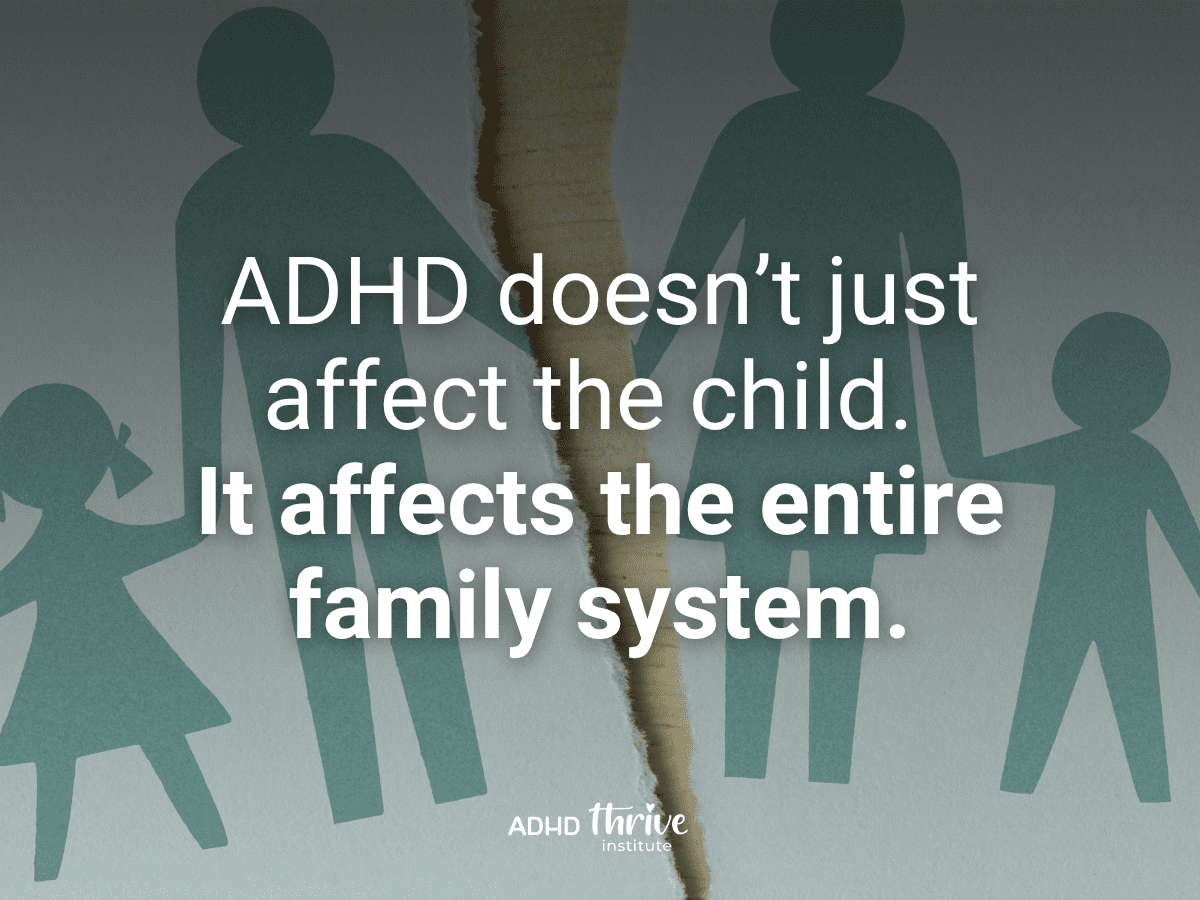
ADHD doesn’t just affect the child. It affects the entire family system.
In this article, we’re going to talk about:
- why parenting a child with ADHD can create so much stress at home
- why some partners emotionally withdraw or “check out”
- how ADHD can quietly impact marriages and relationships over time
- what helped my husband and I reconnect as a team
- practical ways to start improving communication and reducing conflict at home
We’ll also talk about one of the biggest struggles many couples face: what happens when you and your partner don’t agree on how to support your child’s ADHD symptoms.
Why ADHD Can Put So Much Stress on Families
Parenting a child with ADHD can be incredibly rewarding, but it can also be incredibly exhausting.
Many families find themselves stuck in a cycle of constant conflict, emotional overwhelm, and never-ending demands. Simple parts of the day that seem easy for other families (like getting out the door, doing homework, getting ready for bed, or navigating transitions) can feel like daily battles.
Over time, that kind of stress takes a toll.
Parents become emotionally exhausted, the home starts to feel overstimulating instead of peaceful, and many couples slowly shift out of “partnership mode” and into “survival mode.” Instead of connecting with each other, they’re constantly managing behaviors, solving problems, putting out fires, and trying to make it through the day.
Unfortunately, when families stay in that state for long enough, emotional distance can start to grow.
Remember: ADHD doesn’t just affect the child. It affects the entire family system. It impacts routines, communication, stress levels, relationships, and the emotional climate of the home itself. That’s why so many parents feel like they’re carrying an invisible weight that other people don’t fully understand.
Why Some Partners Emotionally Check Out (& what changed for us)
One of the hardest parts of parenting a child with ADHD is what it can quietly do to a relationship over time. When one partner starts emotionally withdrawing, it’s easy to assume they don’t care or aren’t invested. But in many cases, that’s not actually what’s happening.
More often, they’re overwhelmed.
They feel helpless. They don’t know how to fix what’s happening at home. They may feel emotionally flooded from the constant stress and conflict, so instead of leaning in, they start pulling away.
Sometimes that looks like working longer hours.
Sometimes it looks like shutting down emotionally.
Sometimes it looks like avoiding difficult conversations altogether.
While these things can feel painful and personal to the other partner, that withdrawal is often less about a lack of love and more about a coping strategy.

That single realization became a major turning point in my own marriage.
Instead of viewing each other as the problem, we started recognizing that ADHD (and the stress surrounding it) was the thing putting pressure on our family. Once we stopped fighting against each other and started working together again, things slowly began to change.
How to Stay Connected While Parenting a Child With ADHD
Here are some of the specific strategies we put into place to help us reconnect as a team. These strategies can help you also as you parent your child with ADHD and deal with the stress that ADHD can create inside the home.
1. Open Communication
One of the first things that helped was simply talking more honestly about what we were both feeling (not just about our son’s behaviors, but about our own fears, frustrations, exhaustion, and overwhelm).
Before that, many of our conversations had become purely logistical:
“Did you call the school?”
“Did he take his supplements?”
“Can you handle bedtime tonight?”
But underneath all of that were two stressed parents silently struggling. Once we started having more open conversations, things slowly began to soften between us.

2. Getting Support Outside the Home
One of the biggest mistakes families make is trying to carry all of this stress alone.
Parenting a child with ADHD can feel incredibly isolating, especially if people around you don’t fully understand what daily life actually looks like.
Finding support made a huge difference for us.
That support can look different for every family:
- support groups
- therapy
- educational resources
- connecting with other parents who truly understand
This lack of support among ADHD parents is actually one of the main reasons I created my free ADHD Parent Support Group on Facebook. Sometimes just realizing other families are experiencing the same struggles can lift an enormous emotional weight.
If you’d like to join that free online community, you can do so here.

3. Getting on the Same Page About ADHD Support
This was one of the hardest parts for us, and it’s something I see in many marriages affected by ADHD stress.
Sometimes partners don’t agree on how to support their child.
One parent may want to explore natural approaches. The other may feel medication is the only realistic option. Or one parent may feel hopeful about trying something new while the other feels skeptical, exhausted, or afraid to get their hopes up again.
These disagreements can quickly turn into tension, resentment, or feeling dismissed by the person you most want support from.
Honestly, many of these conversations become emotionally charged because both parents are scared. They’re scared for their child, scared of making the wrong decision, or scared nothing will help (or all of the above)!
One thing that helped us tremendously was learning how to approach these conversations more collaboratively instead of emotionally reacting to each other.
Often, the goal is actually the same: both parents want a calmer, healthier home.
They just may have different ideas about how to get there.
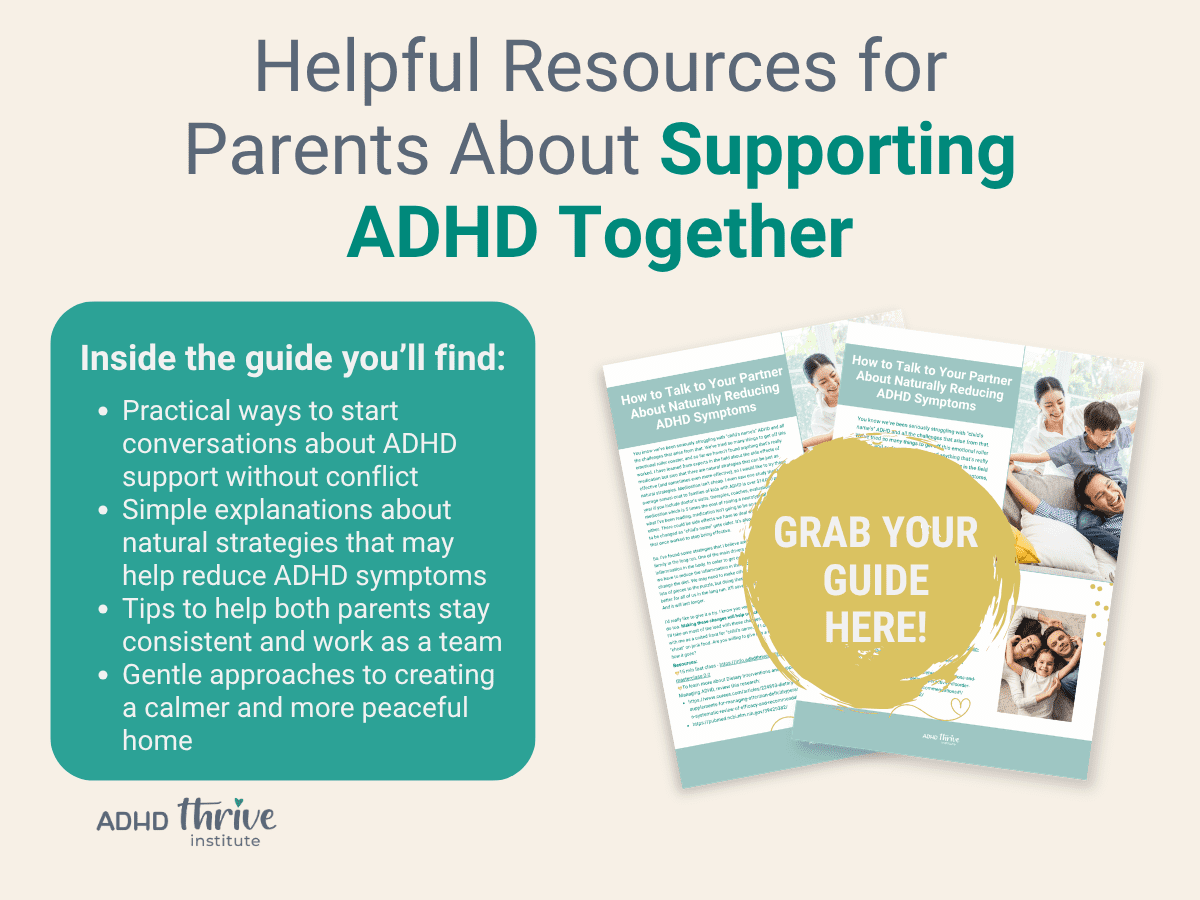
To help with these conversations, my team and I created a free downloadable guide called How to Talk to Your Partner About Naturally Reducing ADHD Symptoms.
We created:
- one version for families currently using medication
- one version for families not using medication
These guides include simple conversation scripts that can help make these discussions feel less emotional and more productive.
Grab your copies at the link below:
How to Talk to Your Partner About Naturally Reducing ADHD Symptoms
4. Create House Rules Together
Another thing that helped us was creating clearer house rules together. When only one parent is setting expectations or enforcing routines, it can quickly create tension and inconsistency.
But when both parents help create the structure, it becomes much easier to present a united front. This reduces confusion for your child and reduces conflict between partners as well.
Even if you don’t agree on every parenting strategy, reminding yourselves that you are on the same team changes the entire tone of the relationship.
5. Protect Couple Time Again
When ADHD symptoms become the center of family life, couples often stop spending intentional time together altogether. Everything becomes about managing behaviors, appointments, routines, and stress.
One thing that helped us reconnect was protecting small moments of connection.
For us, bedtime routines became especially important because they created predictable time for us to reconnect as adults once the chaos of the day settled down.
This doesn’t need to be elaborate. Even small things count and compound over time:
- checking in at the end of the day
- watching a show together
- having uninterrupted conversations
- going on occasional dates when possible
6. Listen Before Solving
When stress is high, it’s very easy to jump into defensiveness, problem-solving, or trying to prove your point, but many times, what your partner actually needs first is to feel heard.
Learning to listen with curiosity instead of immediately reacting changed many of our conversations.
Validation doesn’t mean agreement. It simply means that you are saying, “I understand why you feel that way.” That shift alone can dramatically reduce tension between partners.
7. Take Care of Yourself Too
One thing I learned the hard way is that burnout doesn’t stay contained to one person.
When parents are completely depleted physically and emotionally, it affects the entire home, including the relationship.
For years, I put myself last, and eventually, that caught up with me through anxiety, exhaustion, overwhelm, and emotional burnout.
Taking care of yourself is not selfish. When your nervous system is constantly overwhelmed, it becomes much harder to show up patiently, communicate clearly, and stay connected to your partner.

If Your Partner Feels Checked Out, Start Here
If your partner feels emotionally distant right now, start with your shared goals. Remember, most parents want the same things:
- a calmer home
- less stress
- a happier child
- a stronger family
The problem is usually not that one parent cares and the other doesn’t. It’s that both parents are overwhelmed and coping differently.
Start Here – Watch My Free ADHD Training Together & Discover What’s Really Driving Symptoms
It’s also important to remember that ADHD symptoms don’t happen in isolation. Behavior is often connected to deeper biological stressors happening underneath the surface.
Inside my free live ADHD training, you’ll learn:
- the most common biological stressors we see in kids with ADHD
- how these affect focus, behavior, and emotional regulation
- practical next steps you can take to start reducing symptoms naturally
It is 100% possible to move from constant survival mode into a place of more clarity, calm, and hope, and this free training is your first step.
You can save your spot for the free training here.
Because while ADHD can absolutely strain a relationship, it does not have to destroy one.
FAQs About ADHD and Relationship Stress
Can ADHD affect a marriage?
Yes, ADHD can place significant stress on a relationship, especially when symptoms create ongoing conflict, emotional exhaustion, and overwhelm at home. Many couples find themselves stuck in survival mode, which can lead to emotional distance over time if the stress isn’t addressed together.
Why do some dads (or moms) emotionally check out?
In many cases, emotional withdrawal is less about a lack of love and more about overwhelm. Some parents may feel helpless, overstimulated, emotionally flooded, or unsure how to help, so they cope by pulling away or avoiding conflict.
How do we stop fighting about ADHD?
One of the biggest shifts is moving from blame to collaboration. Instead of viewing each other as the problem, try focusing on the shared goal: creating a calmer, healthier home for your child and family. Open communication, clearer expectations, and outside support can also make a huge difference.
Can parenting ADHD cause burnout?
Absolutely. Parenting a child with ADHD can be emotionally and physically exhausting, especially when families are dealing with constant stress, behavioral challenges, school issues, or disrupted routines. Over time, that chronic stress can lead to burnout for one or both parents.
How do we get on the same page?
Start with honest, low-pressure conversations about what each of you is feeling and what goals you share for your child and family. It also helps to approach ADHD as something you’re facing together, rather than debating who is “right.” Educational resources and conversation guides can help make these discussions feel less emotionally charged.