
When you think about summer, toxins probably aren’t the first thing that comes to mind. Instead, it’s probably sunshine, swimming, popsicles, and more time outside.
Unfortunately, summer can be one of the highest-exposure seasons when it comes to environmental toxins.
Why?
Between sunscreen, bug spray, pool chemicals, pesticides, plastics, and even air quality on hot days, your child is coming into contact with A LOT of toxins.
This article isn’t about fear or trying to eliminate every exposure. (That’s not needed or even possible.) Instead, this article is aiming to provide you with strategies to reduce your child’s exposure to toxins in simple, realistic ways.
We’re going to walk through:
- the most common summer toxins kids are exposed to (including some surprising ones)
- why these exposures can have a bigger impact on children with ADHD
- simple, practical ways to reduce your child’s exposure without taking the fun out of summer
- and how to focus on the small changes that actually make the biggest difference
It is possible to let your child fully enjoy summer, while still supporting their brain and body. This article will show you how.
Why Summer Toxin Exposure Matters (Especially for Kids With ADHD)
For kids with ADHD, increased toxin exposure matters more than most people realize. Their systems are already working harder to stay balanced, especially when it comes to focus, behavior, and emotional regulation.
When you layer in additional stress from environmental toxins, it can make that balance even harder to maintain. It’s not that these exposures cause ADHD. They don’t. BUT, they can add to the overall load the body is trying to manage, which can make symptoms more noticeable day to day.
The body is constantly processing everything it’s exposed to, and in children whose detoxification systems are still developing, that process isn’t always efficient. Additionally, in my experience working with over 1,600 kids with ADHD, I’ve noticed a pattern: many of these kids have compromised detoxification pathways.
What that means is that their detox body systems are inefficient at breaking down and eliminating toxins, leading to a toxic buildup or high toxic burden in the body. This toxic build up can impact the nervous system, which is directly connected to how a child focuses, regulates emotions, and responds to the world around them.
Reducing even some of that exposure can help take pressure off the system and create more room for regulation and resilience.
The Most Common Summer Toxins (and Simple Ways to Reduce Them)
When you know what to look for, summer toxins become much easier to manage. Remember, the goal isn’t to avoid these things completely; it’s to reduce exposure where you can.
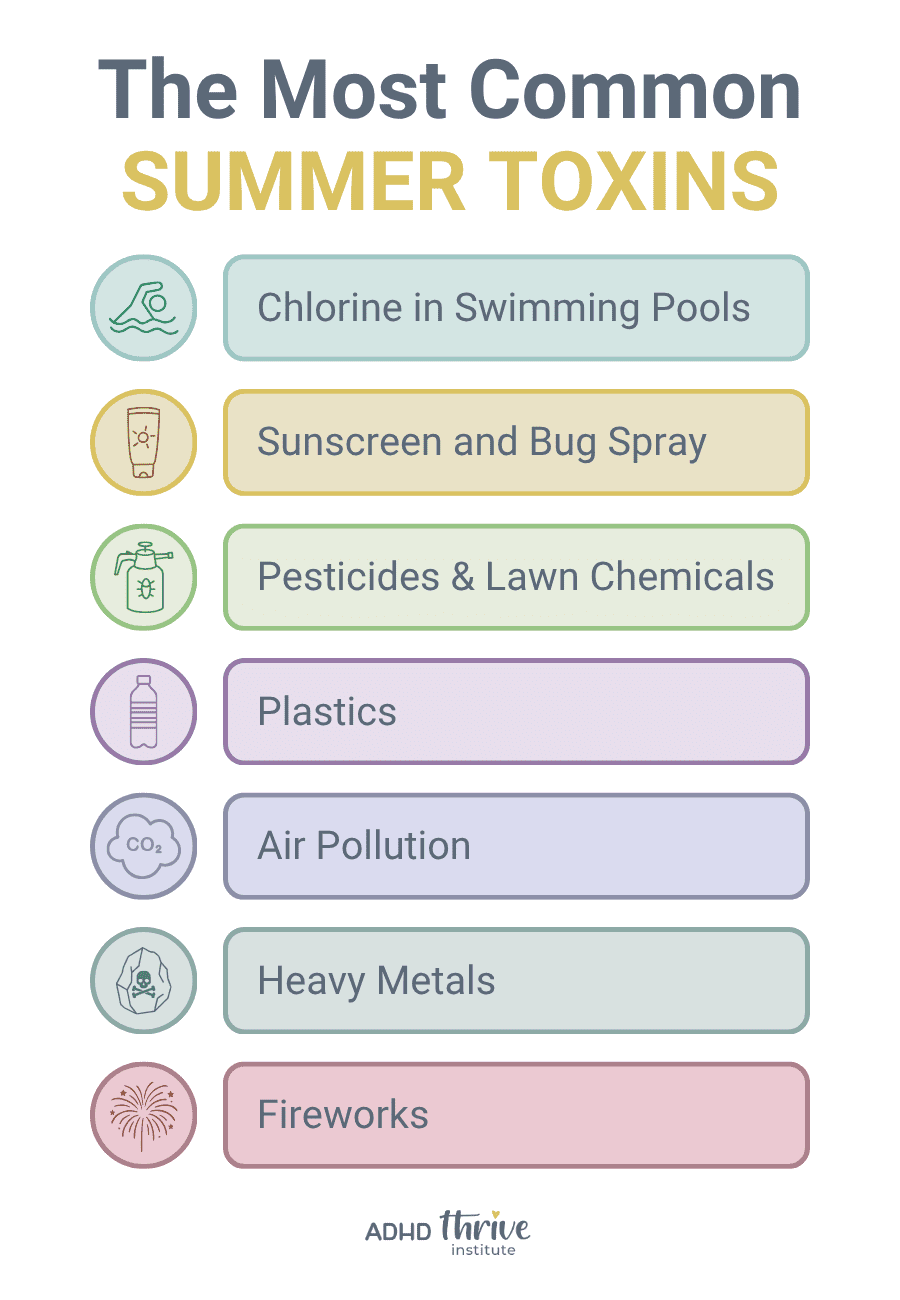
Here are the most common summer toxins to be aware of:
1. Chlorine in Swimming Pools
Chlorine is used to keep pools clean, but it’s also a chemical that can be absorbed through the skin and inhaled, adding to the body’s detox burden.
Here are a few simple tips to help with this:
- Rinse before and after swimming to reduce absorption
- Apply a light layer of coconut oil on the skin beforehand as a barrier
- Use detox baths (like magnesium baths) after swimming
- When possible, opt for swimming in less toxic bodies of water (see more information below)
- Consider a HM-ET binder to help flush out the toxins.
When considering various pool options, here are a few that I prefer over typical chlorinated pools.
Saltwater Pools:
One of the most popular alternatives to traditional chlorine pools is the saltwater pool. Saltwater pools use a process called electrolysis to produce just enough natural chlorine (from salt) to clean the water, but the levels are much lower, and the chlorine is less harsh because it's produced naturally and continuously. This results in less irritation to the skin and eyes, and the water feels softer.
Ozone Pools:
Ozone pools utilize ozone gas to clean and sanitize pool water. This method reduces the need for chlorine and other chemicals, making it a gentler option for children with sensitivities. Ozone is highly effective at killing bacteria and viruses without leaving harmful residues.
UV Filtration Systems:
Ultraviolet (UV) pool cleaning systems use UV light to kill bacteria, viruses, and algae. When used in conjunction with a minimal amount of chlorine, UV systems can significantly reduce the overall chemical load in pool water, making it a safer option for sensitive individuals.
Natural Swimming Ponds:
For a completely different approach, natural swimming ponds are designed to mimic the self-cleaning properties of natural bodies of water. They use plants and natural filters to purify the water, completely eliminating the need for chlorine and other chemicals. These ponds provide a unique and eco-friendly swimming experience, though they can be more complex and expensive to install.
Public Access to Natural Waters:
Whenever possible, opting for swims in the ocean, lakes, or rivers can be a wonderful alternative. These natural bodies of water are free from chlorine and offer a refreshing experience. BUT, it's important to check local advisories for water quality to ensure safety.
2. Sunscreen and Bug Spray
Many conventional sunscreens contain chemicals like oxybenzone and octinoxate, which can act as endocrine disruptors and be absorbed into the body. Bug sprays, in a similar way, are often full of toxic chemicals.
Take these steps:
- Choose a mineral sunscreen with zinc oxide or titanium dioxide
- Look for fragrance-free options
- For bug spray, opt for cleaner, plant-based or lower-tox alternatives when possible
3. Pesticides & Lawn Chemicals
Summer means more time in parks, on sports fields, and in backyards. These are all places where pesticides and lawn chemicals are often used.
Here are a few simple ways to reduce exposure:
- Wash hands after playing outside
- Remove shoes when coming indoors
- Rinse off after heavy outdoor play, especially if your child has been on grass
4. Plastics
Plastics are everywhere in summer—from water bottles to food containers to inflatable pools.
Many contain BPA and phthalates, which can disrupt hormones, and heat can increase how much of these chemicals leach into food and drinks.
Try these simple swaps:
- Use stainless steel water bottles instead of plastic
- Store food in glass containers when possible
- Avoid heating food in plastic or leaving plastic bottles in the sun
4. Air Pollution
Hot weather can increase levels of ozone and other pollutants, especially in certain areas. This can impact kids more than adults, particularly with prolonged exposure.
Here are a few helpful tips:
- Limit outdoor time during high pollution or poor air quality days
- Focus on clean indoor air (ventilation, air purifiers if available)
5. Heavy Metals
With more time spent outside, kids may come into contact with heavy metals in soil, especially in older neighborhoods or near buildings. This isn’t something to panic about, but it’s worth being aware of.
Here are a few simple steps to reduce this potential toxin:
- Encourage hand washing after outdoor play
- Avoid hand-to-mouth habits when playing in dirt
6. Fireworks
Fireworks can release air pollutants and heavy metals into the air. For most families, this is occasional exposure, but it’s still something to be mindful of. Try to avoid repeated or close-range exposure, especially for sensitive kids.
The takeaway here is simple: You don’t need to eliminate summer fun. You just need to be aware of where exposure is coming from and make a few intentional choices that reduce the overall load.
I did a podcast on this topic too. If you’d like to tune in to hear more about summer toxins, click here.
Don’t Forget the Good: Why Summer Still Supports ADHD Kids
While it’s important to be aware of toxin exposure, summer also brings some powerful benefits for kids with ADHD. More time in the sun means more Vitamin D, which plays a key role in brain function and mood for ADHD kids. Add in increased movement and time in nature, and you’re supporting the nervous system in a really positive way.
These are the things that help with regulation, focus, and emotional balance, which is why the goal isn’t to limit summer, but to support it in a more intentional way.
Overwhelmed and Unsure Where to Start?
If this feels like a lot, that’s completely understandable. The biggest mistake parents make here is thinking they need to do everything.
You don’t.
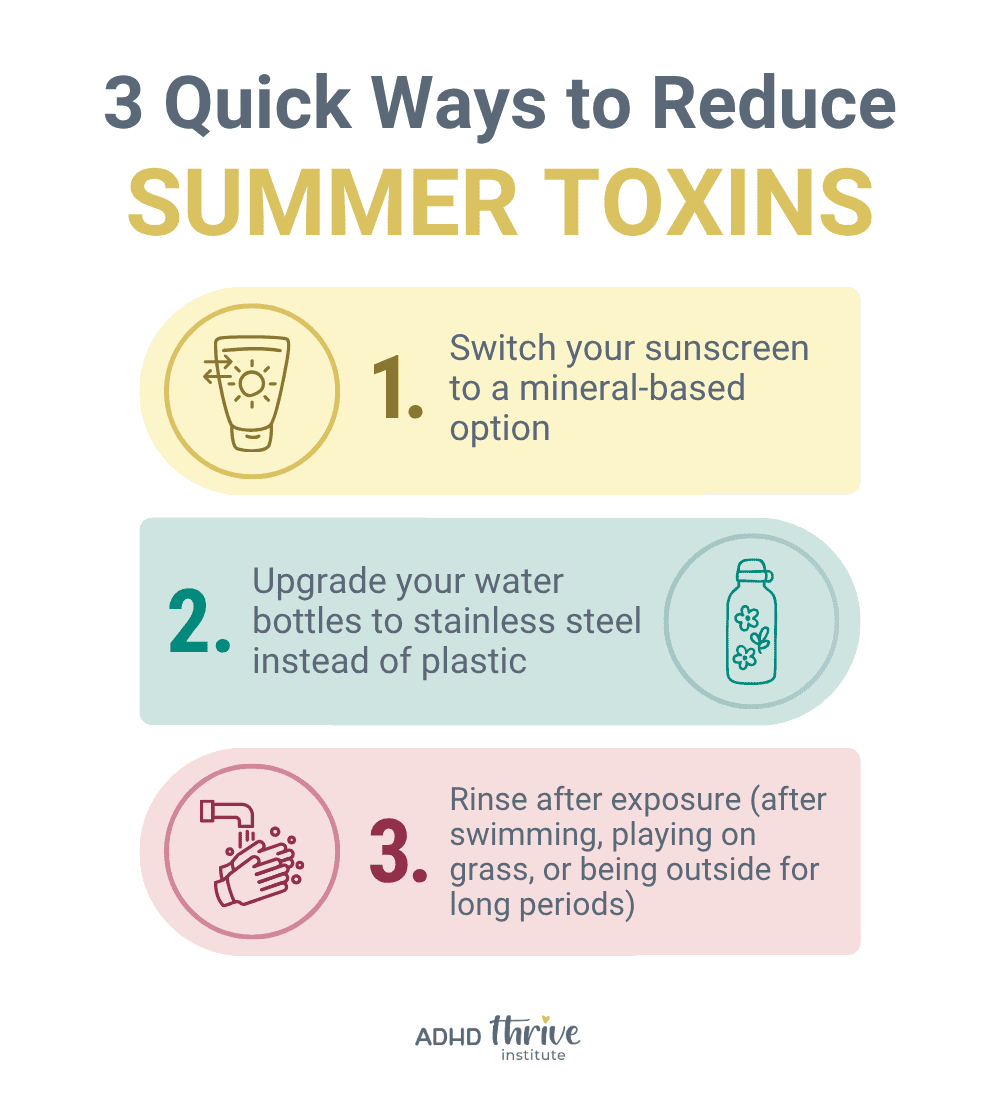
In fact, trying to change everything at once is usually what leads to overwhelm! Instead, focus on just a few simple changes that make the biggest impact. Here are 3 swaps I often recommend to families who are just starting out:
- Switch your sunscreen to a mineral-based option
- Upgrade your water bottles to stainless steel instead of plastic
- Rinse after exposure (after swimming, playing on grass, or being outside for long periods)
That’s it. Start there.
Remember, the goal isn’t to eliminate every toxin. It’s to reduce the overall load in a way that’s realistic and sustainable. Small, consistent changes will always have a bigger impact than trying to do everything perfectly.
Free ADHD Training: What’s Really Driving Symptoms
As you think about everything we’ve covered, it’s important to remember this:
Reducing toxin exposure can absolutely help, but it’s just one piece of the puzzle.
For most kids with ADHD, there are multiple layers affecting how their brain and body function. Things like gut health, nutrient levels, blood sugar balance, and other biological stressors all play a role in how symptoms show up day to day.
Inside my free ADHD training, you’ll learn:
- the most common biological stressors we see in kids with ADHD
- how these show up as challenges with focus, behavior, and emotional regulation
- why some strategies seem to work for a while… and then stop
- and where to start so you’re not trying everything at once
Save your spot in the free ADHD training here.
FAQs About Summer Toxins
Is chlorine bad for kids?
Chlorine isn’t something you need to completely avoid, but it is a chemical exposure that can add to the body’s overall load. Since it’s absorbed through the skin and inhaled, it can impact sensitive kids more. Simple steps like rinsing before and after swimming can help reduce exposure.
What sunscreen is safest?
The safest option is a mineral sunscreen that uses zinc oxide or titanium dioxide. These sit on top of the skin rather than being absorbed. It’s also best to choose options that are fragrance-free and avoid common chemical filters like oxybenzone and octinoxate.
Are pesticides harmful?
Pesticides can definitely be a concern, especially with repeated exposure. Kids are more vulnerable because their bodies are still developing. While you can’t avoid them entirely, simple habits like washing hands, removing shoes, and rinsing off after outdoor play can help reduce exposure.
Do toxins affect ADHD?
Toxins don’t cause ADHD, but they can add stress to the body, which may make symptoms more difficult to manage. Reducing overall exposure can help support a more regulated system.
How do I reduce exposure without stress?
Start small and focus on the biggest impact areas. You don’t need to change everything. Simple steps like switching sunscreen, using stainless steel water bottles, and rinsing after outdoor exposure can make a meaningful difference over time.