
There’s a line from the hit show Parks & Recreation that I think about every December.
Leslie Knope, in all her determined, big-hearted glory, asks the townspeople of Pawnee,
“Are you better off now than you were a year ago?”
It’s a simple question…but for parents raising a child with ADHD, it can land like a punch to the gut.
If you’re anything like the thousands of families I’ve worked with, this year may have felt like a blur of meltdowns, school calls, picky eating battles, restless nights, and emotional exhaustion.
Even if things did improve a little, all it takes is one bad day to send your nervous system right back into panic mode.
So when you hear that question — “Am I better off than last year?” — something inside you whispers back:
“I don’t know…Are we?”
The truth is, most parents of kids with ADHD avoid this question because they’re afraid of the answer.
But today, I want to help you look at it with gentleness, honesty, and hope, because this question isn’t meant to shame you. It’s meant to empower you.
It’s meant to show you that waiting another year for things to magically get better isn’t a plan, and your child deserves more than another year of “wait and see.”
Why This Question Matters So Much for ADHD Families
Kids with ADHD don’t simply “grow out of” the struggles that keep showing up day after day. Some kids might – over time – learn how to manage their symptoms so they can get through life easier, but ADHD doesn’t just go away on its own.
That’s why the “wait and see” approach is so risky.
I know many parents hope that with another birthday, another school year, or another developmental leap, things will magically click into place. But what I see over and over is that a year of waiting often turns into a year of:
- more frustration
- more meltdowns
- more school battles
- more strain on the family
- and more missed opportunities for healing
When internal stressors go unaddressed (like inflammation, nutrient deficiencies, gut imbalances, or nervous system overload), symptoms don’t just stay the same. They usually grow louder.
This is where the risk comparison becomes real:
The risk of taking action:
You’ll learn what’s underneath your child’s symptoms, make changes, and see progress (sometimes slow, sometimes fast, but always moving forward).
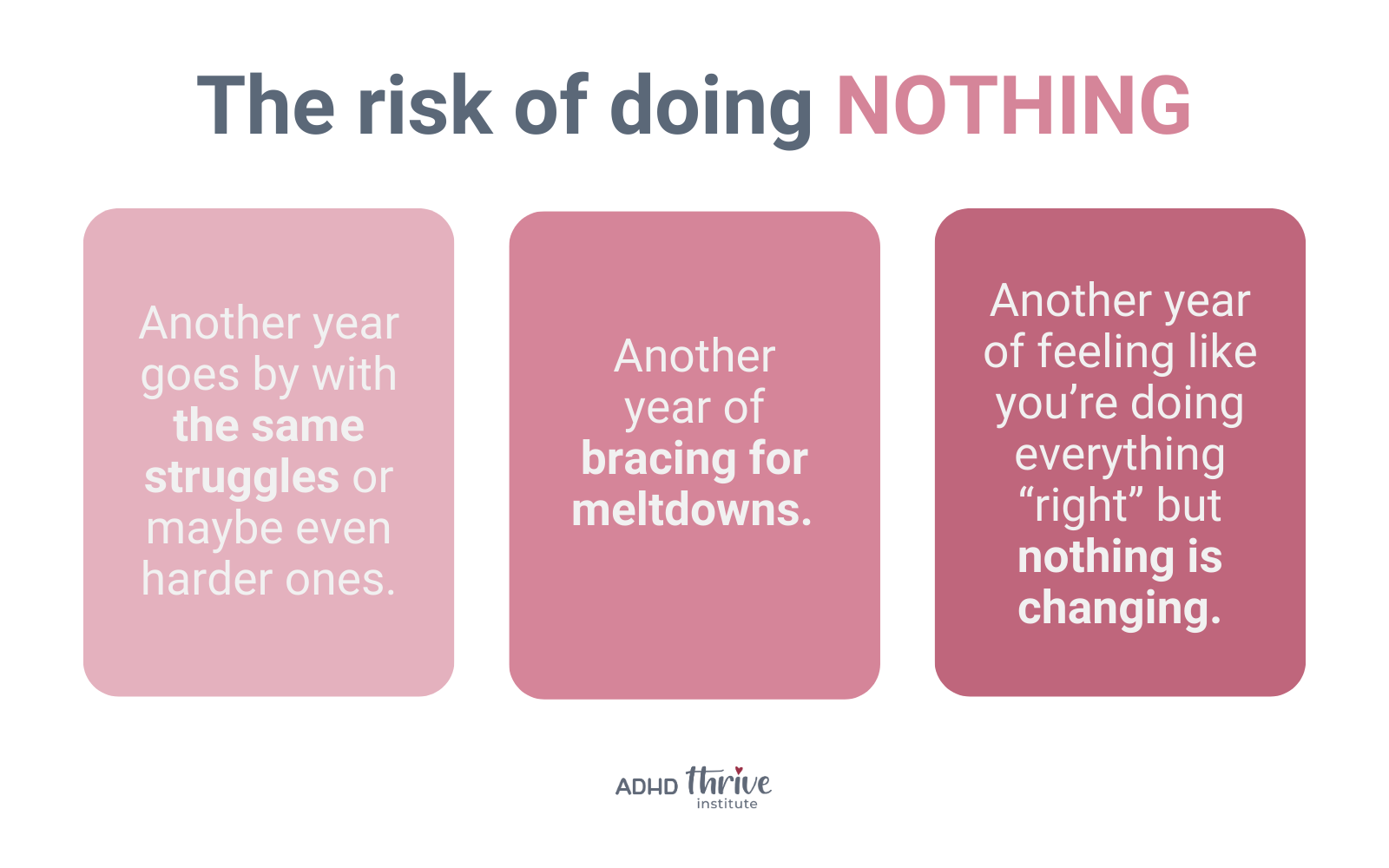
The risk of doing nothing:
Another year goes by with the same struggles or maybe even harder ones. Another year of bracing for meltdowns. Another year of feeling like you’re doing everything “right” but nothing is changing.
I learned this the hard way with my own son, Oliver.
There was a period of time when I desperately wanted to believe he’d “grow out of” the constant meltdowns, the overwhelm, and the explosive reactions. School was calling almost daily, and I kept thinking, Maybe this is just a phase. Maybe next year will be easier.
But next year wasn’t easier.
The symptoms didn’t fade; they intensified. Our home felt tense. My nervous system was fried. Oliver was struggling in ways that were breaking my heart, and I didn’t yet understand that his behavior was a message…not a moral failing and not “bad parenting” but instead his body crying out for help.
It wasn’t until we stopped waiting and started addressing the biological stressors in his body that everything changed.
Once we began supporting his biology (his gut, his nutrition, his inflammation, and his nervous system), the emotional storm softened, and our relationship healed.
That’s why this question matters so much.
Because doing nothing carries a much bigger risk than taking a step forward.
Every parent deserves to know that waiting isn’t neutral. It has a cost.
But taking action (one small step at a time) can transform an entire year for your child and for you.
Progress Isn’t Linear…But It Should Be Happening
One of the biggest misconceptions parents have is that reducing ADHD symptoms naturally should look like a perfectly straight line: fewer meltdowns, better behavior, more focus, all improving steadily over time.
But that’s not how it really works.
Especially when we’re addressing the biology beneath the behavior, progress tends to show up in waves. You’ll have stretches of calm, ease, and noticeable improvement… and then suddenly, a hard day or tough week flares up out of nowhere.
This is normal and to be expected when reducing ADHD symptoms naturally.
Instead of expecting perfection, look for these three signs that real progress is happening beneath the surface:
- Fewer Meltdowns Overall
Even if your child still has big feelings (because all kids do!), you’ll notice that the emotional storms come around less often. Maybe you used to have daily blowups, and now it’s once or twice a week. That decrease in frequency is a meaningful sign that the body is becoming more regulated.
- Reduced Intensity
A meltdown that once lasted 45 minutes might now last 10. Or instead of screaming and throwing things, your child cries or shuts down but recovers more easily. When the intensity softens, it shows that the nervous system isn’t as inflamed or overwhelmed as it used to be.
- Faster Recovery Time
This is one of the clearest markers of healing. Kids begin to bounce back more quickly after stress, disappointment, or dysregulation.
Their system isn’t stuck “revving” for hours anymore. They can move on, reset, and reconnect. Even if the “old behavior” still shows up from time to time, the way your child moves through it is different, and that’s progress.

These shifts may seem small at the moment, but biologically, they’re huge. They tell us that the gut is stabilizing, inflammation is decreasing, nutrients are being better absorbed, the brain is getting what it needs, and the nervous system is finally getting a chance to breathe.
Reducing ADHD symptoms naturally isn’t about eliminating every hard moment. It’s about building a more resilient body and brain, one that can regulate, recover, and reconnect faster and more consistently.
So if this year has felt like a mix of good days and hard days, don’t be discouraged.
Look deeper. Look for these three markers. They’re often the first signs that you’re on the right path, even before the bigger transformations show up.
The Hard Truth: Waiting Carries a Cost
As encouraging as it is to recognize the signs of progress, there’s another side of this conversation that we can’t ignore.
Waiting carries a cost.
Not because you’re doing anything wrong.
Not because you’re not trying hard enough.
Not because you’re a “bad parent.”
But because biology doesn’t improve on its own.
When a child’s gut is struggling, when inflammation is high, when sleep is poor, when nutrients are depleted, those internal stressors don’t quietly disappear over time. They build and compound.
While kids absolutely grow, mature, and change with age, the underlying drivers of their symptoms often stay the same unless we support them directly.
But this post is not about blame; it’s about awareness and empowerment.
You’re not expected to know what’s happening inside your child’s gut or nervous system. You’re not supposed to magically understand every meltdown or every school struggle. And you certainly shouldn’t be carrying the weight of this alone.
This post is about reminding you that you do have options, that waiting isn’t your only choice, and that your child doesn’t have to stay stuck in the patterns you’ve been seeing.
The Biology Behind Progress (Why Doing Nothing Keeps Kids Stuck)
Behavior is only the surface layer of what’s going on. Underneath the symptoms, there are often biological stressors quietly influencing everything else.
I dive deeply into these stressors in my full article, The Biology Beneath ADHD: A New Way of Understanding Your Child, but here’s the short version:
When certain systems inside the body are imbalanced, overwhelmed, or inflamed, the brain can’t function at its best, and no amount of “waiting” changes that biology.
Some of the biggest biological triggers I see in kids with ADHD include:
- Blood Sugar Dysregulation
Erratic blood sugar can look exactly like an attention problem, a mood issue, or an impulse-control challenge. Spikes and crashes are incredibly common and incredibly overlooked.
- Gut-Brain Dysfunction
When the gut is inflamed, imbalanced, or stressed, so is the brain. This is why kids with ADHD often experience stomach aches, constipation, or food reactions alongside emotional storms or focus issues.
- Food Sensitivities
Gluten, dairy, artificial dyes, inflammatory oils, and even certain additives can irritate the nervous system and trigger behavioral symptoms. These reactions don’t fade with time. They intensify until the trigger is removed.
- Poor Detoxification Pathways
When the liver or gut can’t efficiently remove toxins and inflammation, those “stress signals” build up in the body. Over time, they show up as irritability, sensory overload, sleep struggles, or trouble regulating emotions.
- Nutrient Deficiencies
Low magnesium, zinc, omega-3s, B vitamins, and vitamin D can all disrupt sleep, mood, focus, and nervous system stability.
When these systems are struggling, asking a child to “focus more,” “stay calm,” or “behave better” is like asking them to reason their way out of a biological imbalance.
It’s not fair to them, and it’s not effective for us.
Why This Keeps Kids Stuck
If nothing changes on the inside, then nothing meaningful can change on the outside.
This is why so many families battle the same behaviors year after year. The underlying stressors aren’t being addressed, so the symptoms they cause are simply repeating themselves.
But here’s the good news.
When even one of these biological stressors is supported, the brain begins to regulate, the nervous system begins to settle, and the behavior begins to shift.
That’s why I tell parents all the time:
Small biological improvements lead to big behavioral changes.
Just like thousands of families in our programs have experienced, progress on the outside is simply a reflection of healing on the inside.
Once you see behavior through a biological lens, “waiting” stops feeling like a strategy.
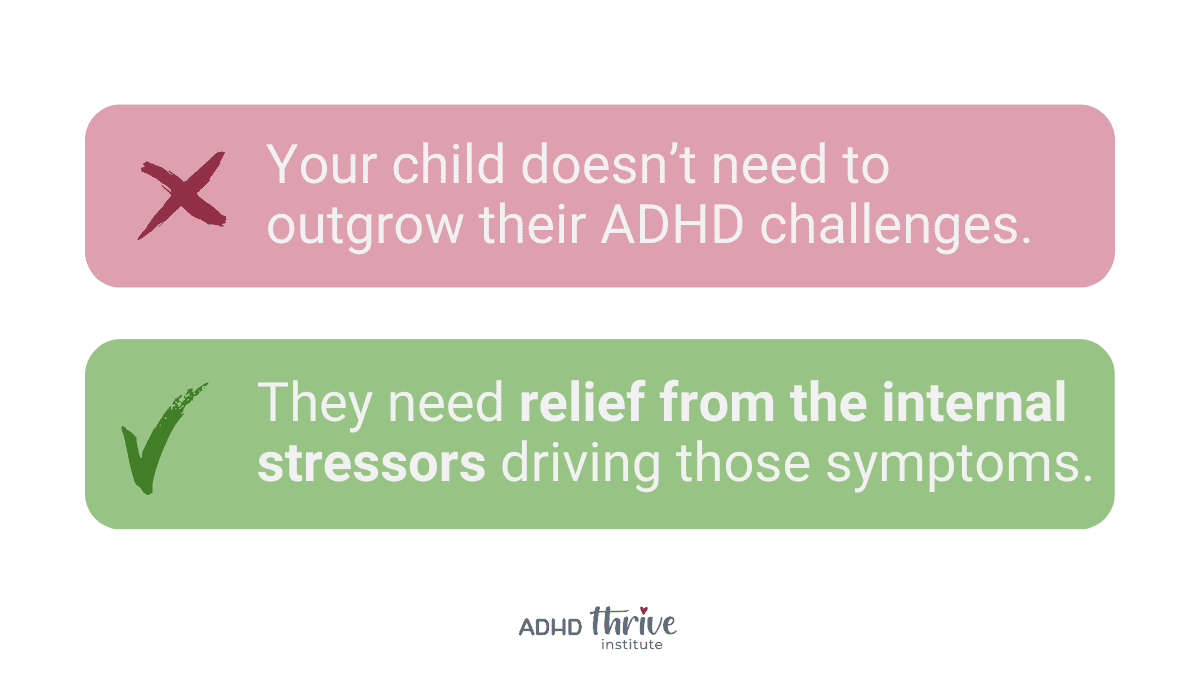
You begin to understand that your child doesn’t need to outgrow their ADHD challenges. They need relief from the internal stressors driving those symptoms.
That means another year of waiting often becomes another year of struggling.
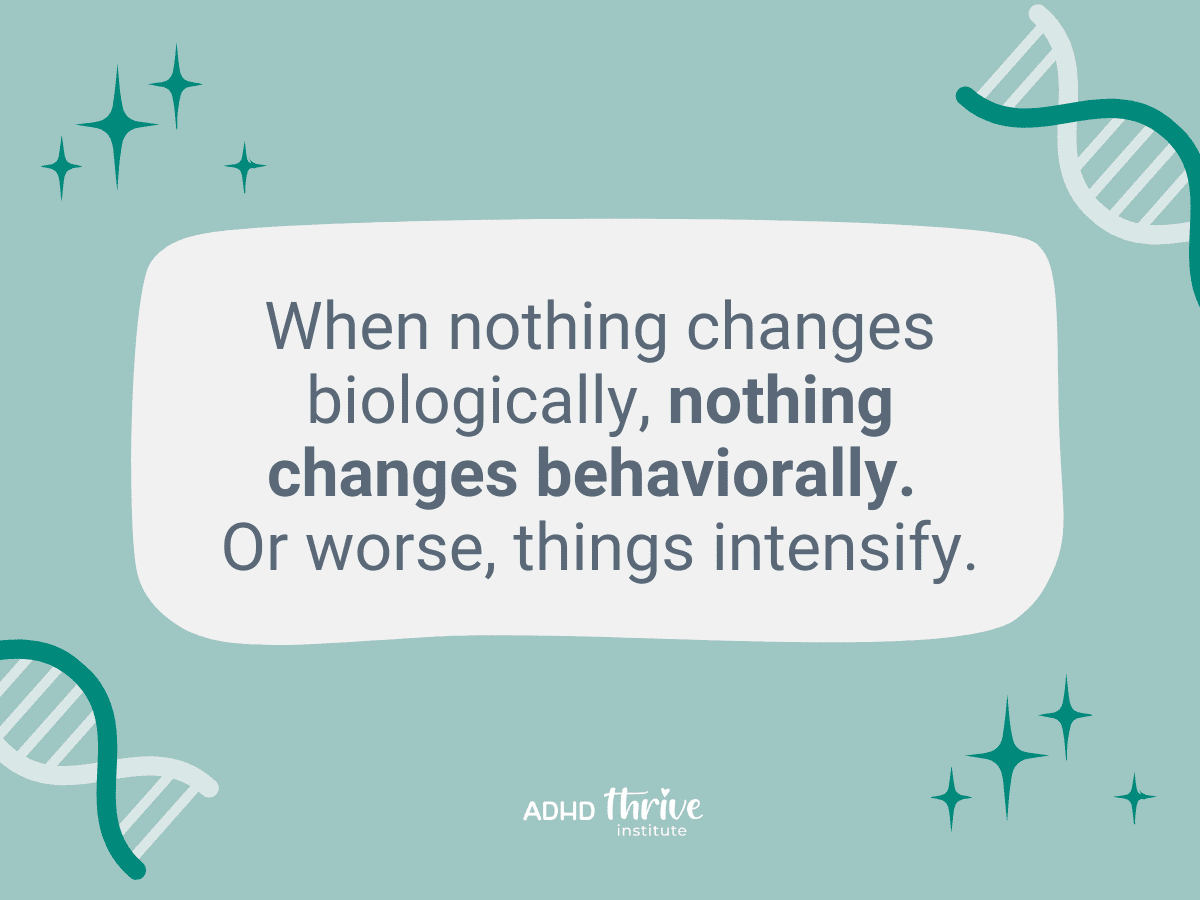
When nothing changes biologically, nothing changes behaviorally. Or worse, things intensify.
That’s exactly what the next step of the journey is all about.
So Much Can Change in a Year
When you stop waiting for symptoms to magically improve…
When you stop guessing and start looking at the biology underneath…
When you take small, steady steps with a science-backed strategy…
Everything can shift.
Just look at what happens when families finally address the biology beneath instead of chasing behavior:
One mom shared how her son came home from a neighbor’s house for the first time ever without melting down when it was time to leave. In the past, those moments were explosive, but now…not so much.

“This is major,” she said, “Changes are happening.”
Another parent told us they spent years playing “whack-a-mole with supplements,” seeing small improvements but never stability. It wasn’t until they ran the functional labs inside our program that they uncovered hidden infections, mold exposure, and food triggers no one had ever identified.

“It’s been truly life-changing,” she said.
And one mom shared that, after lab testing, she finally understood why her son was struggling so deeply. He had leaky gut, inflammation, pyrrole disorder, and 30 food sensitivities.
Within a week of removing his triggers and supporting his biology, his teacher was already commenting on his improvements.

“It’s worth every penny,” she said.
These aren’t rare cases.
This is what happens when you stop guessing and start understanding what’s happening inside your child’s body.
That’s why the most impactful next step — the step that ensures another year doesn’t slip by without change — is to speak with someone who can help you understand what’s going on beneath the behavior.
Not with pressure and not with judgment, but instead offering a clear roadmap on what to do next.
If your heart is saying, “I don’t want another year like this,” then let’s figure out what your child’s body is trying to tell you.
👉 Book a Free ADHD Thrive Breakthrough Call
On this call, we’ll discuss what you’ve tried in the past, what’s worked (and what hasn’t), and what your next step should be. It’s 100% free, and there are no obligations.
Let’s make sure next year looks completely different for your child and your family.
Frequently Asked Questions About ADHD, Progress, and Natural Support
- How do I know if my child’s ADHD symptoms are improving?
Look for three key signs: fewer meltdowns, reduced intensity, and faster recovery.
These are early markers of a more regulated nervous system and often show up before bigger behavioral changes. Even small improvements signal that the body is healing internally.
- Can ADHD symptoms really get better naturally?
Yes. While ADHD is a neurological condition, many symptoms are influenced by biological factors like gut health, nutrient levels, inflammation, and sleep. When these areas are supported, many families see major improvements in ADHD symptoms.
- Why don’t kids typically “grow out” of ADHD symptoms?
Because the underlying biological stressors (like gut imbalances, food sensitivities, or nutrient deficiencies) don’t resolve on their own. Kids may learn coping strategies as they age, but without addressing these underlying stressors, the symptoms usually persist or intensify.
- What biological issues make ADHD symptoms worse?
Some of the most common internal triggers include:
- blood sugar instability
- gut dysbiosis
- food sensitivities
- poor detoxification pathways
- nutrient deficiencies
These imbalances can affect mood, impulsivity, focus, sleep, and emotional regulation.
- How can I tell if biology is contributing to my child’s ADHD?
If your child also struggles with sleep issues, stomachaches, skin problems, anxiety, frequent meltdowns, or sensory overload, those are classic signs that internal stressors are at play. BUT, even if your child doesn’t display any of these classic signs, biology could very well be at play. Behavior is often a messenger for what’s happening biologically.
- What’s the problem with the “wait and see” approach?
Waiting can mean:
- another year of meltdowns
- worsening symptoms
- increased inflammation
- more family stress
- missed developmental windows
Without biological support, symptoms typically don’t fade. They grow louder.
- How long does it take to see changes once we address the biology?
Many families begin noticing improvements in just a few weeks, though every child is different. Bigger changes often unfold over months as the gut stabilizes, inflammation decreases, and the nervous system settles.
- What is functional lab testing and how does it help?
Functional labs look beneath the behavior to identify hidden issues like leaky gut, bacterial or yeast overgrowth, mold exposure, pyrrole disorder, food sensitivities, and detoxification challenges. You can learn more about functional lab testing in my four-part functional lab testing series that starts HERE.
These tests give a clear roadmap so you’re not guessing or “trying everything.”
- Do I need lab testing before I can help my child?
No, you can begin with foundational changes (like dietary modifications). But lab testing often fast-tracks progress, ends the guesswork, and reveals the exact biological stressors contributing to your child’s symptoms.
- What’s the next best step if I want real change next year?
The fastest and safest next step is to book a free ADHD Thrive Breakthrough Call.
There’s no pressure. We’ll explore what’s going on beneath your child’s symptoms and help you identify the path forward based on biology, not guesswork.