

Every August, parents head to the store to stock up on everything their child needs for a new school year: a new backpack, fresh notebooks, sharpened pencils or new pens, a lunchbox, and new shoes.
But after helping more than 1,600 families of children with ADHD, I've learned that the most important back-to-school preparation isn't something you'll find in the school supply aisle. It's preparing your child.
Because while a new school year is exciting, it's also one of the biggest transitions your child's brain and body will experience all year. They’ll have new teachers, new classmates, new routines, higher expectations, different schedules, and more demands on attention, emotional regulation, and executive functioning.
It's no wonder that so many parents tell me their child's ADHD symptoms seem to get worse during the first few weeks of school.
The good news is that there are several simple things you can do before the first day of school to help make the transition smoother for your child.
In this ADHD back-to-school checklist, we'll cover:
- six practical ways to prepare your child before the first day of school
- how to reduce back-to-school stress for the whole family
- common mistakes many ADHD parents accidentally make
- why preparing your child's brain and body is just as important as preparing their backpack
- and how to set your child up for a calmer, more successful school year
ADHD Back-to-School Checklist
Preparing a child with ADHD for a successful school year isn't necessarily about doing more but instead focusing on the few things that can make the biggest difference.
Here's where I recommend families of kids with ADHD focus their attention:
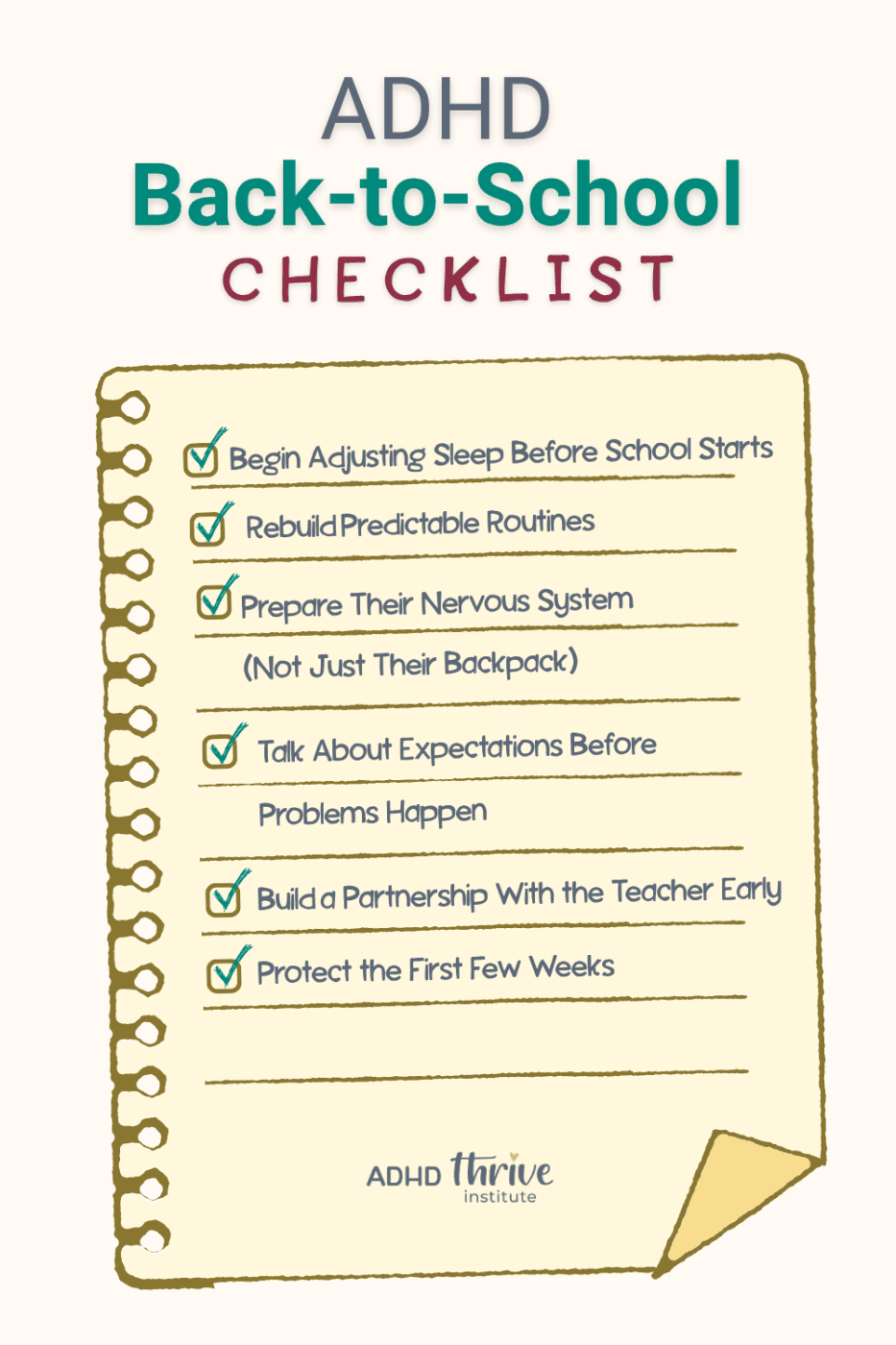
- Begin Adjusting Sleep Before School Starts
One of the biggest mistakes I see parents make is waiting until the night before school starts to move bedtime earlier.
Unfortunately, that's usually a recipe for a rough first week.
Instead, begin adjusting your child's bedtime and wake-up time one to two weeks before school starts. Even shifting their schedule by 15 to 30 minutes every few days can make the transition much easier.
Sleep plays a huge role in attention, emotional regulation, learning, memory, and behavior. When children don't get enough quality sleep—or their body clock is suddenly thrown off—ADHD symptoms often become much more noticeable.
If mornings have been more relaxed over the summer, start practicing those too. Wake your child at the same time they'll need to get up for school, work through your morning routine together, and allow everyone time to adjust before the first day arrives.
Your future self will thank you when the alarm goes off on that first morning.
If sleep has always been a struggle for your child, be sure to read my article on what ADHD parents need to know about sleep. A healthy sleep routine is one of the best foundations you can build before the school year begins.
- Rebuild Predictable Routines
Children with ADHD often thrive when they know what to expect. After the more relaxed schedule of summer, jumping straight into the structure of the school year can feel overwhelming.
Rather than waiting until the first day of school, begin rebuilding your family's routines ahead of time.
Practice your morning routine, including getting dressed, eating breakfast, brushing teeth, and packing backpacks. Re-establish your after-school routine too, thinking about when your child will have a snack, complete homework, spend time outside, and wind down for the evening. Finally, return to a consistent bedtime routine that helps signal to your child's brain that it's time to sleep.
Visual schedules can be incredibly helpful for children with ADHD. Whether it's a checklist on the refrigerator or pictures for younger children, having routines they can see reduces the mental load of remembering what comes next. Additionally, simple habits like packing backpacks and lunches the night before can reduce morning stress for everyone. Make a plan now for how you will handle the first week of school.
Remember, it doesn’t have to be a rigid schedule. It just needs to create enough predictability that your child feels safe, confident, and prepared before the school year begins.
- Prepare Their Nervous System (Not Just Their Backpack)
Most parents spend hours preparing “stuff” for back to school (like backpacks, school supplies, new clothes, etc).
But after working with more than 1,600 families, I've learned that the most important preparation isn't what goes into the backpack—it's preparing the child who's going to wear it.

School places enormous demands on a child's nervous system: bright lights, busy classrooms, noisy cafeterias, constant transitions, social interactions, academic expectations, long periods of sitting still, etc. (Read more about how back to school affects the nervous system here.) That's why I encourage parents to spend just as much time supporting their child's body as they do shopping for school supplies.
So how do you support a child’s nervous system?
It’s not one thing, but rather a combination of things. As mentioned already, make quality sleep a priority. Focus on nutrition. Provide balanced meals that include plenty of protein, whole fruits and veggies, and low inflammatory foods. Keep your child well hydrated, encourage daily movement, and continue supporting gut health and other areas that influence overall regulation. If your child has sensory sensitivities, think ahead about what accommodations or tools might help them feel more comfortable at school.
When a child's nervous system is better supported, they're often better equipped to handle the demands that come with a new school year.
If you're looking for more information about the natural strategies we use to support children with ADHD, be sure to read my comprehensive guide to natural remedies for ADHD, where I explain the biology-first approach we use with families around the world.
- Talk About Expectations Before Problems Happen
Instead of waiting until the first difficult morning, the first forgotten homework assignment, or the first emotional meltdown, start talking about school expectations before the year begins.
Walk through what a typical morning will look like. Talk about what happens if they need help in class. Discuss friendships, transitions between activities, lunchtime, and how they'll handle situations that don't go as planned.
You don't need to cover every possible scenario. Instead, simply help your child feel more prepared for what's ahead.
Children with ADHD often do better when they know what to expect, so these conversations can go a long way toward building confidence before the first day of school.
- Build a Partnership With the Teacher Early
Don't let the first communication with your child's teacher be a negative email or phone call. Instead, reach out early and begin building a relationship with your child's teacher before the first day of school (or at least during the first week).
Share your child's strengths, not just their challenges. Let the teacher know what motivates your child, what strategies have worked well in the past, and any accommodations or supports that have been particularly helpful. (If you’d like to learn more about 504 plans and IEPs for ADHD kids, check out this article.)
You can also discuss how you'd like to communicate throughout the school year so small concerns don't become much bigger problems.
When parents and teachers work together as a team, children often benefit from greater consistency between home and school.
If communicating with the school has felt overwhelming in the past, remember that it’s a new year. I'll also be publishing another article soon on what to do if your child's teacher doesn't seem to understand ADHD, so be on the lookout for that!
- Protect the First Few Weeks
It's tempting to jump back into everything once school starts: sports, clubs, birthday parties, appointments, playdates, etc. But even positive activities require energy.
The first few weeks of school are a major adjustment for children with ADHD. Their brains are working overtime to adapt. Don't be surprised if your child comes home more tired than usual, seems more emotional, or needs extra downtime after school.
As much as possible, protect those first few weeks by avoiding overscheduling. Limit unnecessary appointments, keep evenings calm, and prioritize early bedtimes while everyone settles into the new routine.
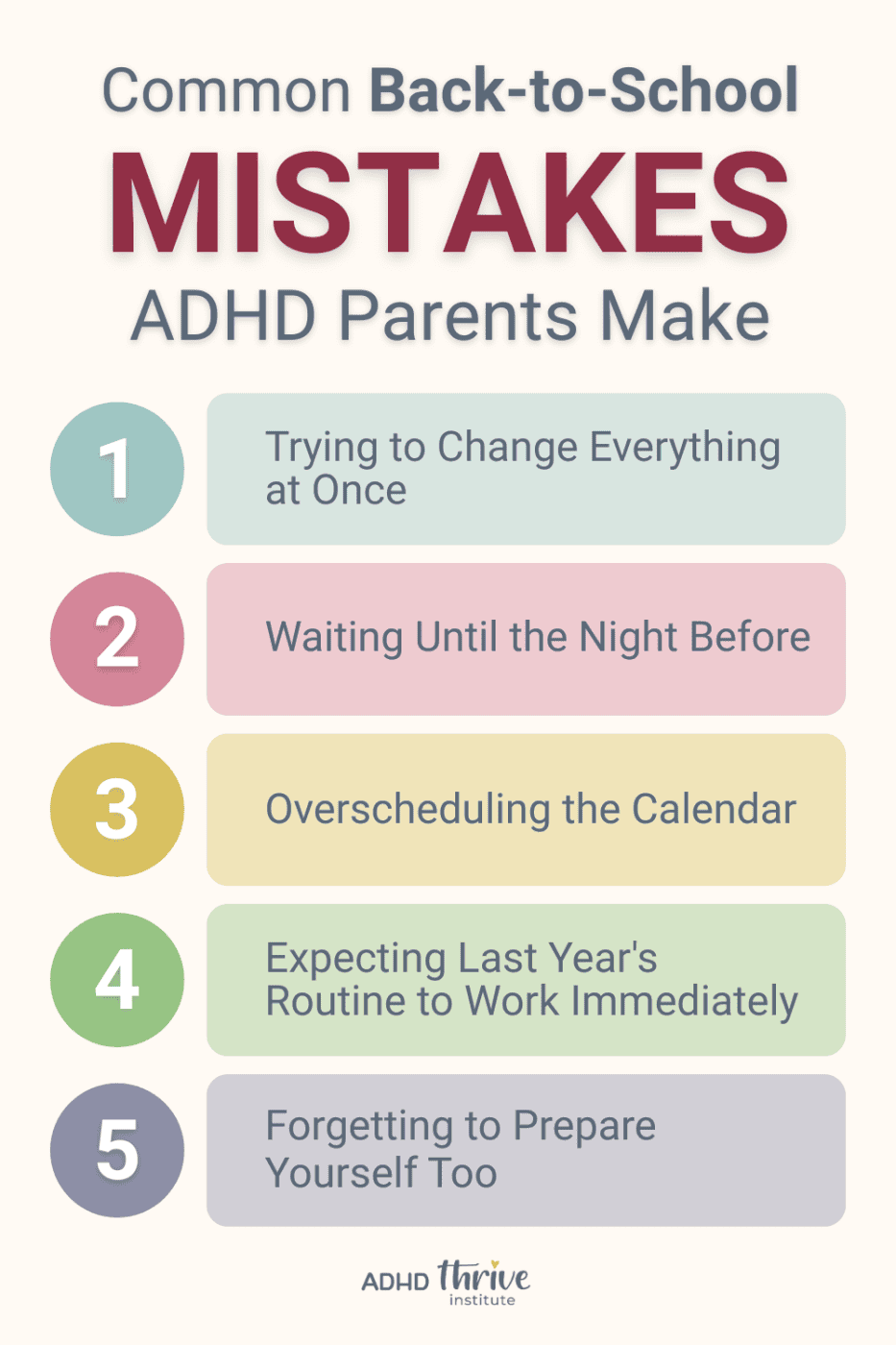
Common Back-to-School Mistakes ADHD Parents Make
Even with the best intentions, it's easy to make a few common mistakes during the back-to-school season. The good news is that once you're aware of them, they're often easy to avoid.
- Trying to Change Everything at Once
The start of a new school year can feel like the perfect time for a fresh start. Parents often want to introduce an earlier bedtime, healthier eating habits, new routines, less screen time, and better organization all at the same time.
While those are all wonderful goals, trying to overhaul everything at once can leave both you and your child feeling overwhelmed.
Instead, focus on one or two key changes first. As those become habits, you can gradually build from there.
- Waiting Until the Night Before
Many families don't begin preparing for school until the day before it starts. Unfortunately, that's when stress levels are already high.
The more you can spread out your preparation over the week or two leading up to school, the smoother those first few days are likely to be. Small changes made gradually are often much easier for children with ADHD than one big change overnight.
- Overscheduling the Calendar
It's exciting to sign up for sports, clubs, music lessons, and other activities. But remember that school itself is a big adjustment.
Before filling every afternoon and weekend, give your child a chance to settle into their new routine. You can always add activities later if everyone is managing well.
- Expecting Last Year's Routine to Work Immediately
Even if your child finished last school year on a high note, this is a brand-new beginning with a new teacher, new classmates, and new expectations.
It's completely normal for your child to need time to adjust. Give yourself permission to view the first few weeks as a transition rather than expecting everything to fall into place on day one.
- Forgetting to Prepare Yourself Too
As parents, we spend so much time preparing our children that we often forget to prepare ourselves. Take a few moments to think about how you want to respond when challenges inevitably arise.
Remind yourself that the first few weeks of school are rarely perfect. There will probably be forgotten homework, emotional mornings, and days that don't go according to plan. That doesn't mean you've failed, and it doesn't mean your child is going to have a bad year.
One of the greatest gifts you can give your child during this transition is your own calm, flexible mindset. When you expect a period of adjustment instead of perfection, it's often easier to respond with patience, problem-solving, and encouragement rather than frustration.
Free LIVE Training for Parent of Kids with ADHD
If there's one thing I hope you take away from this article, it's this:
Preparing your child for school isn't just about buying supplies or creating the perfect routine. It's also about understanding what may be driving the ADHD symptoms that make school so challenging in the first place.
That's what I cover in my free ADHD training.
Inside, you'll learn why so many children with ADHD struggle, the common underlying biological stressors that can amplify these symptoms, and the biology-first approach we've used to help more than 1,600 families reduce ADHD symptoms naturally.
In fact, many of the families we've worked with have gone from frequent calls home, school suspensions, and constant struggles to receiving positive feedback from teachers. If you'd like to hear some of their stories, I've linked several below:
If you're ready to look beyond behavior management and better understand what's happening beneath the surface, I'd love to invite you to join me.
Click here to register for the free ADHD training.
FAQs About Preparing a Child With ADHD for School
How do I prepare my child with ADHD for school?
Start preparing one to two weeks before school begins by gradually adjusting sleep schedules, rebuilding daily routines, talking through expectations, and helping your child feel emotionally prepared for the transition. Supporting their overall health and nervous system before school starts can also make the adjustment much smoother.
When should I start preparing my ADHD child for school?
Ideally, begin about two weeks before the first day of school (or even earlier if you can). This gives your child time to adjust to earlier bedtimes, morning routines, and other changes without the stress of making everything happen overnight.
Why is back-to-school so difficult for children with ADHD?
The start of a new school year brings new routines, increased academic demands, different teachers, social challenges, and more sensory input. For children with ADHD, all of these changes place additional demands on executive functioning and emotional regulation, making the transition especially challenging.
What should I tell my child's teacher about ADHD?
Focus on helping the teacher get to know your child as a whole person. Share your child's strengths, challenges, what motivates them, strategies that have worked well in the past, and any accommodations that support their success. Establishing open communication early can help prevent misunderstandings later in the school year.
How can I make school mornings easier for my child with ADHD?
Consistency is key. Prepare as much as possible the night before, use a predictable morning routine, consider a visual checklist for younger children, and allow extra time so mornings don't feel rushed. The more predictable the routine, the less stressful mornings tend to be for both children and parents.